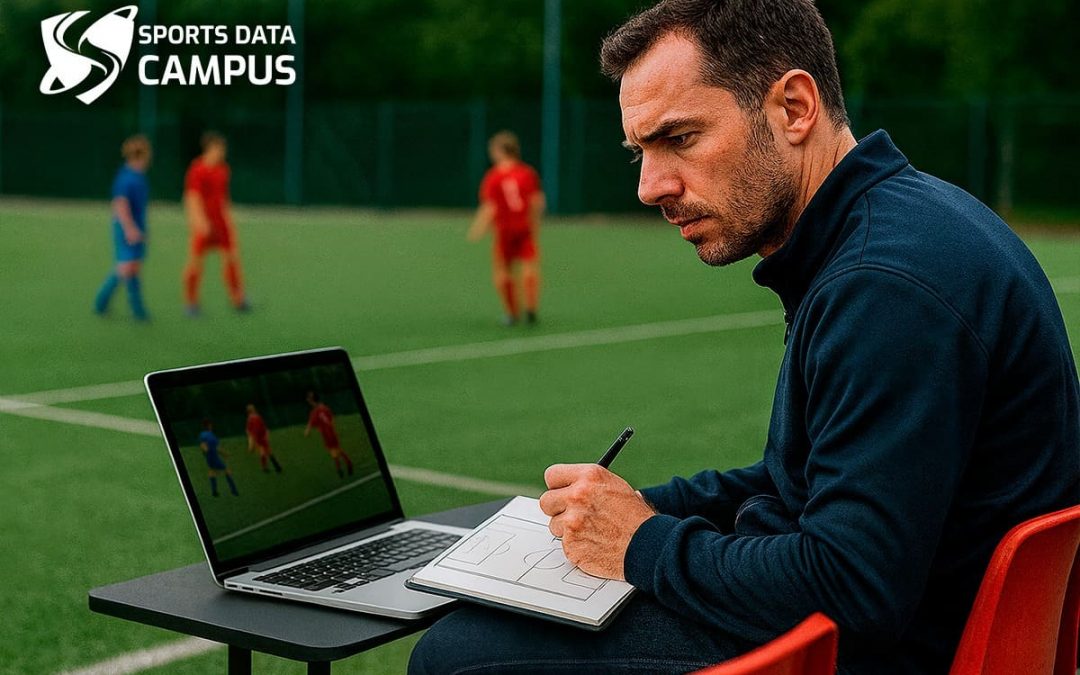
Youth development and academy football focus on the all-round development of young players within a professional club structure. It combines coaching methodology, training, scouting, data analysis, physical preparation and individual player monitoring to improve performance, identify talent and support each player’s progression towards higher age groups and, in some cases, the first team.
Key aspects of youth development and academy football today
Youth development and academy football are evolving towards a much more specialised model within professional clubs. Player development now brings together coaching, methodology, scouting, physical preparation, video analysis and data analysis as connected areas within the same development process.
This approach allows clubs to assess players beyond their performance in a single match. Academy professionals analyse technical, tactical, physical and competitive development, compare progress over time and set objectives suited to each stage of the player’s pathway.
Clubs also aim to ensure that individual development remains aligned with their playing model and the demands of higher age groups. Academy football is therefore not only about identifying talent, but also about developing players who are ready to perform in increasingly demanding competitive environments.
Working in youth development and academy football is a strategic role that requires technical knowledge, methodological judgement and the ability to make decisions based on data
What is youth development in football and how does an academy work?
Youth development in football is the process through which clubs develop young players from a technical, tactical, physical and competitive perspective. The academy provides the structure behind this process, connecting talent identification with individual player development and progression towards higher age groups.
At a professional club, the academy operates through different areas working in coordination. The sporting department defines the development model, while coaches, methodology staff, scouts, analysts and physical coaches contribute at different stages. Each area provides specific information to assess players, set objectives and adapt the work to their stage of development.
This structure means player development does not depend solely on immediate match performance. Clubs also assess each player’s progression, adaptation to the playing model, ability to meet new demands and development over the medium and long term.
The main areas involved in a professional football academy and the role of each one are:
| Area | Role within the academy |
|---|---|
| Academy management | Defines the development model, coordinates the different areas and sets player development objectives. |
| Coaching staff | Works on each player’s technical, tactical and competitive development through training sessions and matches. |
| Methodology | Establishes common development and playing principles across the club’s different age groups. |
| Scouting | Identifies talent, assesses players and monitors those with long-term potential. |
| Performance analysis | Analyses performance, tactical behaviour and individual and team development. |
| Physical preparation | Monitors physical development, training loads and each player’s adaptation to the demands of every stage. |
How player development has changed in football academies
Player development in football academies has changed significantly in recent years. Professional clubs no longer focus solely on technical training, competition and the coach’s assessment. Youth development and academy football now combine specific methodologies, individual monitoring, physical preparation, video analysis and new technologies to support players throughout their development pathway.
One of the biggest changes is individualisation. Coaching staff set different objectives depending on position, age, biological maturity, physical characteristics and each player’s ability to interpret different situations on the pitch. The same training model does not meet the needs of every player or every stage of development.
For example, a 14-year-old winger who stands out for pace will need to develop different areas from a central midfielder working on body orientation, positioning or decision-making under pressure. Academy development aims to identify these needs and provide the right stimuli without losing the connection with the club’s methodology and playing model.
The way talent is assessed has also changed. Clubs now analyse progression over longer periods and consider technical, tactical, physical and cognitive factors before deciding on promotion to a higher age group, positional changes or specific development plans. As a result, a single performance carries less weight than a player’s sustained development over time.
This model is turning professional academies into increasingly specialised development environments. Their aim is not simply to identify talented young players, but to develop footballers who are ready to progress through the age groups, adapt to greater competitive demands and move progressively closer to professional football.
Data analysis in youth development football
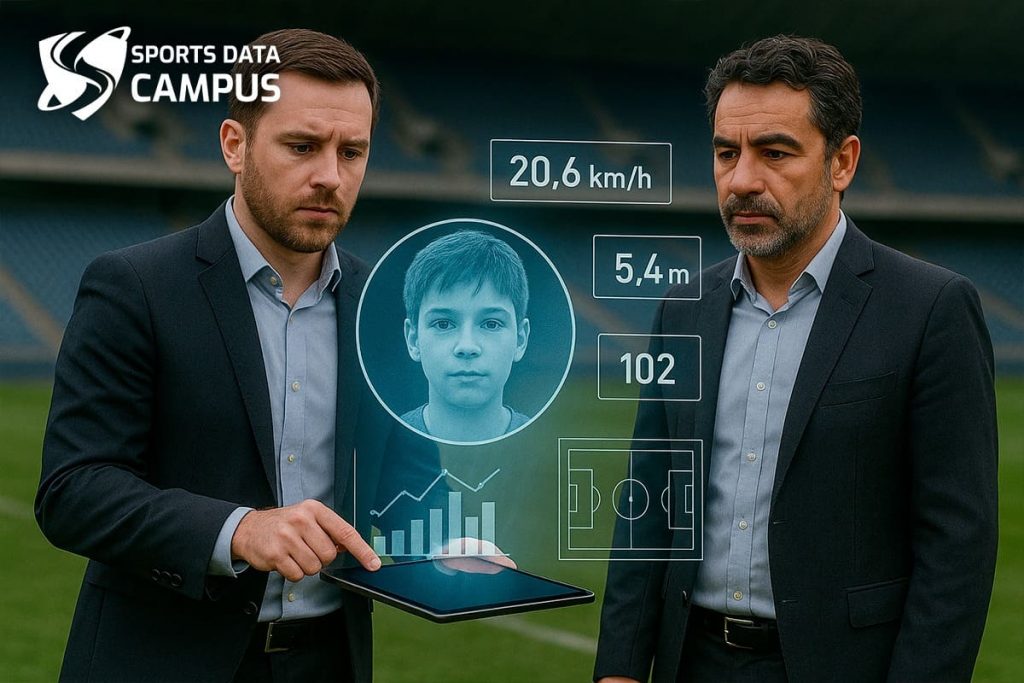
Data analysis in youth development football makes it possible to track a player’s development using objective criteria and compare performance over time. In professional academies, data complements the observations of coaches and analysts and provides context for understanding what happens in training and competition.
The aim is not to collect statistics for their own sake, but to turn information into development-related decisions. Technical and tactical metrics such as involvements, progressive passes, defensive actions, use of space or participation in specific phases of play can reveal trends that may not be obvious from watching a single match in isolation.
Long-term monitoring is particularly important at academy level. Comparing data over weeks or months helps identify improvements, plateaus and changes in behaviour, while taking into account the player’s age, competitive level, position and individual context. The same statistical value does not mean the same thing for a 15-year-old competing against players of the same age as it does for one already playing regularly in an older age group.
Video analysis adds another layer of interpretation. Academy professionals connect metrics with specific match actions to assess decision-making, off-the-ball movement, positioning and responses to different tactical situations. In this way, data stops being an isolated number and starts to explain behaviour within the game.
In youth development and academy football, combining data, video and technical expertise helps clubs build a more complete picture of each player. This provides an objective reference for tracking progression, adjusting development goals and supporting sporting decisions without replacing the judgement of the professionals who work with the player every day.
How to work professionally in youth development and academy football
Working professionally in youth development and academy football requires an understanding of how players develop, how a club’s sporting structure operates and what information each department needs to make decisions. Professionals working at academy level combine football knowledge with specific skills in methodology, analysis, scouting, physical preparation, technology and performance management.
Responsibilities vary depending on the role, but they all contribute to the same objective: supporting the player’s development within the club’s sporting model. An analyst studies individual and team behaviours, a scout assesses talent and potential, a physical coach monitors physical development, and a methodology specialist helps maintain consistency across different stages of the academy pathway. Professionals working with data also provide new tools for interpreting performance and building more accurate player monitoring processes.
For this reason, entering this professional environment requires more than simply understanding the game. Clubs value professionals who can work with information, interpret context, communicate conclusions to coaching staff and collaborate with other departments within a multidisciplinary structure. Specialisation becomes even more important when the aim is to work in academies, youth development departments or talent development projects.
In this context, specialised training provides a broader understanding of how professional youth football operates and helps professionals apply methodologies, tools and processes similar to those used by clubs.
A teaching team with real experience in youth development football
The Master’s Degree in Data Analysis and Artificial Intelligence Applied to Youth Football connects academic training with professionals who understand first-hand how academies, youth development departments and high-performance structures operate. The aim is to help students understand how real decisions are made around recruitment, player development, analysis and the progression of young footballers.
This professional connection is strengthened through the collaboration of Club Atlético River Plate and Instituto Universitario River Plate, both directly involved in the programme. River is widely recognised as a major reference in youth development and has produced players such as Alfredo Di Stéfano, Omar Sívori, Pablo Aimar, Javier Saviola, Gonzalo Higuaín and Hernán Crespo, illustrating the impact a strong academy structure can have on elite talent development.
The academic environment also includes professionals who work directly in youth development. One of them is Mateo Muñoz, Head of Data Analysis in Youth Football at Club Atlético River Plate, whose experience links applied analysis with the real demands of player development.
In this way, the postgraduate programme, certified by UCAM, goes beyond explaining concepts related to youth football. It brings students closer to the methodologies, processes and real cases used in professional structures, combining football, data analysis and Artificial Intelligence with training designed for careers within clubs and academies.