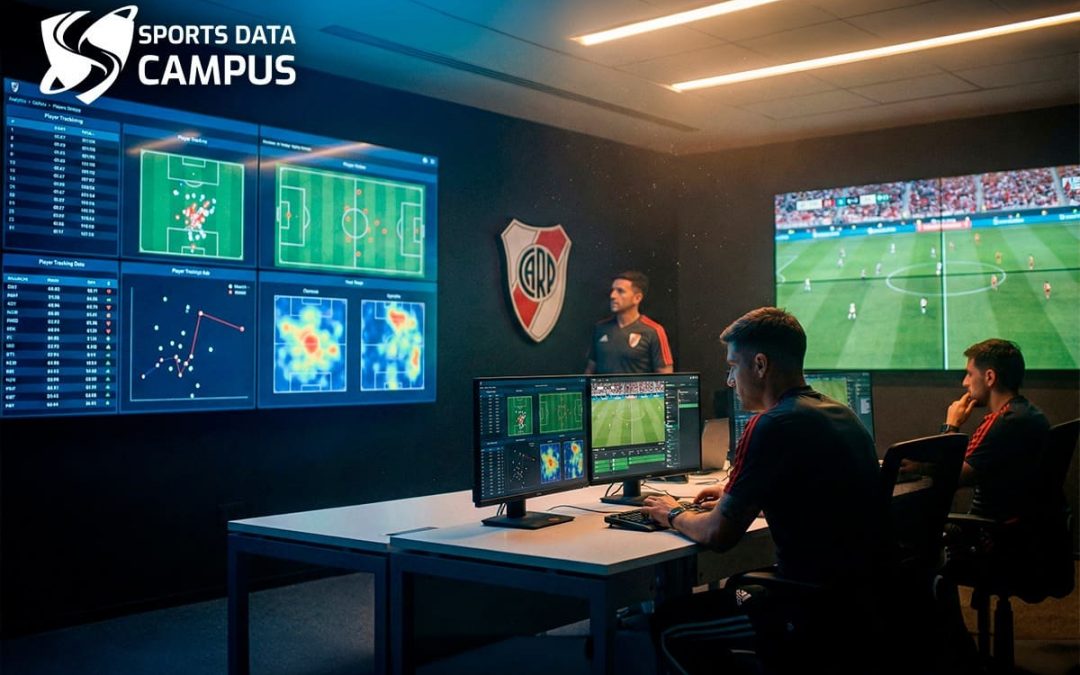
The River Plate methodology goes beyond borders because it is not just about winning matches, but about developing well-rounded players capable of performing at the highest level. The club brings together values, education and sports science within a single process. Every stage, from the youth academy to the first team, follows the same footballing identity shaped by respect, high standards and creativity. This consistency, combined with the use of advanced analytics tools, has turned River Plate into a benchmark for modern youth development football.
Learn and apply the River Plate methodology to identify and develop talent through data
River Plate has developed a unique model to identify and nurture footballers from an early age, combining qualitative observation with quantitative evidence. The academy does not rely solely on the experience of coaches trained in the club’s philosophy, but also on objective metrics that track each player’s development. Through physical load records, tactical analysis and individual monitoring, comprehensive player profiles are built to support more accurate decision-making.
By blending sports pedagogy with data science, talent is no longer left to chance, but supported within a structured environment designed for growth. This approach allows the club to consistently supply the first team and produce world-class players, consolidating a methodology that is now studied in specialised training programmes.
The River Plate methodology aims to develop well-rounded players, not just win matches. It combines values, education and sports science at every stage. Its consistency and use of data have established it as a global benchmark in youth football
Foundations of the River Plate methodology
The River Plate methodology is built around a core principle: the holistic development of the player. This means working in a balanced way on technical, tactical, physical and psychological dimensions to develop footballers who can meet the demands of high-performance environments.
- On a technical level, the focus is on a style of play built around ball control, passing accuracy and creativity in tight spaces. Every training session includes game-like situations that encourage quick decision-making, improvisation and the ability to solve problems under pressure.
- From a tactical perspective, teaching is centred on understanding the game in all its phases. Players learn to read different systems, adapt to opponents with varied styles and consistently put the collective benefit ahead of individual flair.
- Physical preparation follows a progressive plan that covers strength, endurance, speed and injury prevention. Continuous monitoring of each player makes it possible to adjust training loads, optimise performance and ensure sustainable long-term development.
- The psychological aspect plays a leading role. Areas such as resilience, confidence, concentration and pressure management are actively developed, as they are essential in high-demand competitive environments. This mental training is reinforced through match analysis, self-reflection sessions and group dynamics that strengthen the team’s identity.
- Finally, the entire process is underpinned by a strong transmission of values such as respect, humility, hard work and a sense of belonging. Consistency across all age groups ensures that young players entering the academy receive the same philosophy that defines the first team.
Taken together, these foundations turn the River Plate methodology into a holistic model, capable of developing not only top-level footballers but also individuals prepared to face challenges both on and off the pitch.
Advanced analytics tools used
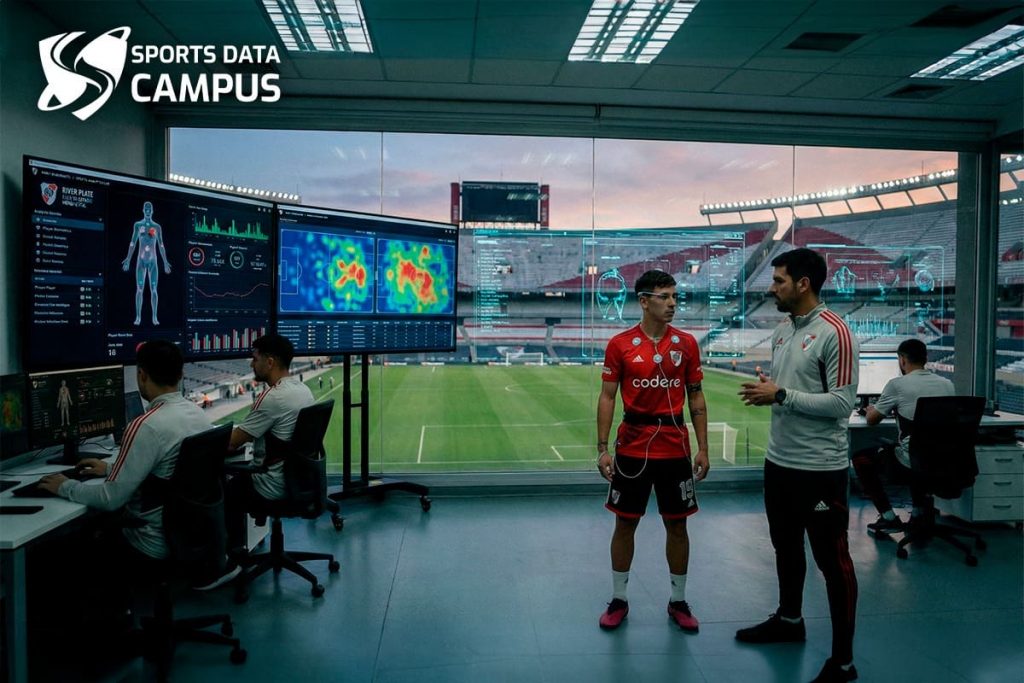
The River Plate methodology for identifying talent through data incorporates advanced analytics as a key complement to player development. The use of video analysis systems, tracking platforms and GPS devices makes it possible to capture every detail of performance in both training sessions and matches. This information is processed through business intelligence tools that generate dynamic reports and clear visualisations for coaches and analysts.
The integration of predictive models and workload metrics allows the club to anticipate injury risks, adjust training plans and personalise routines. In addition, River Plate applies machine learning algorithms to identify patterns in player development, from technical progression to on-pitch decision-making.
Thanks to this ecosystem, data is transformed into actionable knowledge that strengthens the development process and supports strategic decision-making, consolidating River Plate as a benchmark in innovation applied to youth football.
Software and technologies used
The River Plate methodology for identifying talent through data is supported by a technological infrastructure designed to enhance every stage of the development process. In the area of video analysis, tools such as Hudl, Nacsport and LongoMatch make it possible to break down matches and training sessions into specific sequences, facilitating the study of tactical patterns, individual assessment and the design of exercises tailored to each player’s needs. These platforms allow actions to be tagged, libraries to be created and reports to be generated, streamlining communication between coaches and players.
At the same time, tracking and GPS systems such as Catapult and Wimu monitor metrics including speed, acceleration, physical load and distance covered. Their integration with heart rate monitors and strength sensors provides key insights into physiological status and injury risk, optimising physical preparation and prevention strategies.
For data processing and visualisation, languages such as Python and R are used to build statistical and predictive models. These are combined with business intelligence platforms like Tableau and Power BI, which turn raw data into interactive dashboards accessible to coaches, analysts and sporting directors. This analytical layer makes it easier to identify trends and compare player development over time.
Cloud infrastructure, using services such as AWS or Google Cloud, ensures scalability, secure storage and remote access for all club departments. The use of containers like Docker enables frictionless application deployment, ensuring stability and speed across workflows.
Finally, project management and internal communication rely on tools such as Trello, Jira and Slack, which coordinate tasks between coaches, analysts and performance staff. This technological integration not only speeds up processes, but also creates a cohesive ecosystem where data and pedagogy come together to support the River Plate philosophy.
Key metrics for evaluating players and teams
Evaluation at River Plate combines traditional statistics with advanced indicators that provide a deeper understanding of performance. At an individual level, data such as goals, assists, recoveries, successful dribbles, duels won and passing accuracy are recorded. These figures offer a clear baseline for measuring attacking efficiency and defensive solidity.
Alongside these numbers, advanced metrics such as Expected Goals (xG) and Expected Assists (xA) are used to assess the quality of actions beyond their immediate outcome. These tools help identify players who consistently create advantages, even when this is not always reflected on the scoreboard. Parameters related to pressing, transition intensity and off-the-ball involvement are also analysed, as they are essential for understanding each player’s collective impact.
At team level, possession, progressive passing, build-up efficiency from the back and the ability to recover the ball high up the pitch are key metrics. Attacking performance is assessed by comparing the volume and quality of chances created with those conceded, offering insight into overall tactical balance. Set pieces are also analysed in detail, given their growing influence in the modern game.
Physical data completes this picture. Distance covered, maximum speed, number of sprints and internal load are used to fine-tune training sessions and reduce injury risk. Combining this information with technical and tactical metrics generates comprehensive profiles that reflect both current performance and long-term development potential.
This holistic approach ensures that evaluation goes beyond visible statistics and becomes a rigorous control system, where every decision, from team selection to recruitment, is supported by objective evidence that reinforces the River Plate model.
Success stories and the practical application of the methodology
River Plate’s youth academy is recognised as one of the most prolific in the world, and its results confirm the effectiveness of the club’s methodology. Over recent decades, River Plate has developed players who have not only shone in the first team, but have also left their mark on international football.
- Pablo Aimar is an emblematic example of how the River Plate philosophy enhances creativity and game intelligence. From his early years in the youth academy, he developed a unique vision that led him to succeed in Europe with Valencia and Benfica, while also becoming a key figure for the Argentina national team.
- Another case is Gonzalo Higuaín, who emerged from River Plate’s academy and went on to establish himself at Real Madrid, where his goalscoring ability turned him into an international star. His education at River provided the technical and tactical foundations required to compete at the highest level.
- Radamel Falcao also represents the global impact of the methodology. Arriving at River at a very young age, he learned to combine physical power with tactical discipline, which propelled him towards becoming one of Europe’s most outstanding strikers at clubs such as Porto and Atlético de Madrid.
- More recently, players like Lucas Martínez Quarta and Julián Álvarez illustrate how the integration of data and holistic training ensures a competitive profile for modern football. Álvarez, for instance, progressed from academy prospect to World Cup winner with Argentina and a standout performer in the Premier League.
These cases show that the River Plate methodology is not just theory, but a proven system that consistently produces exportable, competitive talent at a global level. It is a model that now inspires academies and training programmes around the world.
The River Plate methodology demonstrates that combining football philosophy, strong values and data creates a development model with sustained success. Its ability to identify talent, support players at every stage and project them to the highest level is now an international benchmark. For those looking to specialise in this innovative approach, the Master’s Degree In Football Academy Analytics, developed in collaboration with River Plate, offers a unique opportunity. A programme designed to master sports analytics, understand academy processes and lead projects that shape the future of football.
Fill in the following form to receive more information about the Master’s Degree in Football Academy Analytics