Technological innovation is no longer an add-on, it’s the backbone of modern sport. From training sessions to club management, and from the fan experience to injury prevention, emerging technologies in sport are reshaping every link in the chain at an unprecedented pace.
Rather than relying solely on talent and intuition, elite teams and athletes now lean on smart devices, algorithms and virtual environments that boost performance and cut down on mistakes. These tools are already part of today’s competitive landscape, allowing for more precise preparation, data-driven decisions and personalised strategies. Understanding how these technologies are being used – and the real impact they’re having – is key to staying ahead of the new paradigm that’s defining the future of sport.
What are the main emerging technologies used in the sports industry?
Emerging technologies in sport are not only changing how athletes train, compete and recover, but also creating a new decision-making model grounded in data and evidence. From physiological tracking to virtual simulation environments, each technological solution brings its own advantages and, when combined, they’re pushing the limits of performance and transforming the overall sporting experience. So, which emerging technologies are shaping the sports industry today?
Emerging technologies in sport are reshaping every part of the sporting ecosystem at a pace we’ve never seen before
Wearables and tracking devices
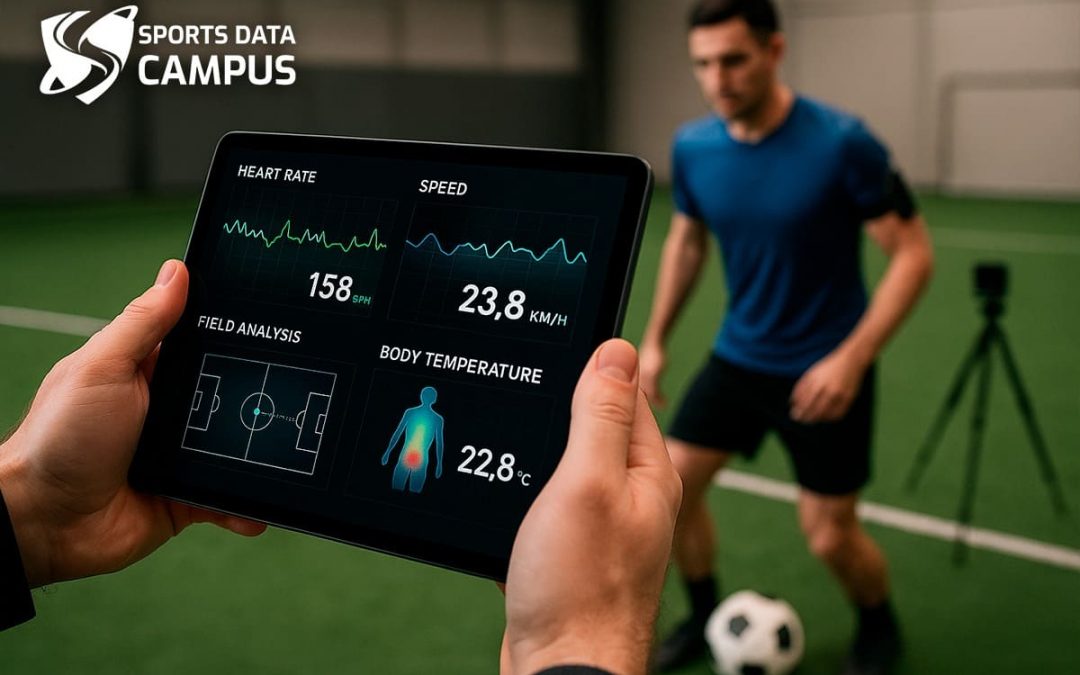
Wearables are transforming the way training sessions are planned and monitored. Far from being simple accessories, these devices act as mobile laboratories capable of recording key performance variables in real time. Wristbands, smartwatches, sensorised clothing and electronic insoles can track heart rate, calorie expenditure, distance covered, running pace, sleep quality or blood oxygen levels, among many other indicators.
Their real value lies in turning raw data into personalised decisions. Coaches and medical teams adjust workloads, recovery times and preventive routines based on objective metrics, reducing injury risk and supporting sustainable performance. For instance, spotting a drop in heart rate variability can reveal fatigue or overtraining before the athlete notices it.
Syncing these devices with mobile platforms allows long-term analysis, helping teams assess an athlete’s development and tailor training strategies accordingly. Many solutions now integrate Artificial Intelligence to deliver personalised alerts, automatic insights or improvement suggestions based on each user’s physiological profile.
This technology is also key for collective monitoring. In team sports, geolocation and accelerometry systems provide detailed information on players’ tactical behaviour on the pitch. This means performance analysis goes beyond physical condition and also evaluates whether strategic patterns are being followed.
The challenge now is to integrate these devices without becoming intrusive, guarantee the protection of the data collected and continue moving towards a more predictive, autonomous and connected tracking ecosystem.
Artificial Intelligence in performance analysis
Artificial Intelligence has firmly established itself as one of the most influential emerging technologies in sport when it comes to understanding and optimising performance. Its ability to process huge volumes of data, uncover hidden patterns and generate accurate predictions has completely transformed the logic of sports analysis.
It’s no longer just about recording what an athlete has done, but anticipating how they will perform, when they might be at risk of injury or which tactical adjustments could help boost their output. Machine learning models can detect relationships between physical, tactical and contextual variables that previously went unnoticed. This leads to sharper, more personalised decisions, both in training planning and during live competition.
Professional clubs use algorithms to analyse tracking data, biometrics, workload and technical performance to fine-tune action plans at both individual and team level. At the same time, talent identification is also benefitting from this technology, as AI can spot high-potential profiles using objective, comparable and evolving metrics.
On top of that, natural language processing and automated video analysis now make it possible to extract tactical information without manual intervention. This saves time, reduces bias and provides a much deeper understanding of the game.
The key lies in integrating these systems within a coherent methodological approach, where data doesn’t replace intuition, but complements it with a level of precision never seen before.
Virtual and augmented reality in training
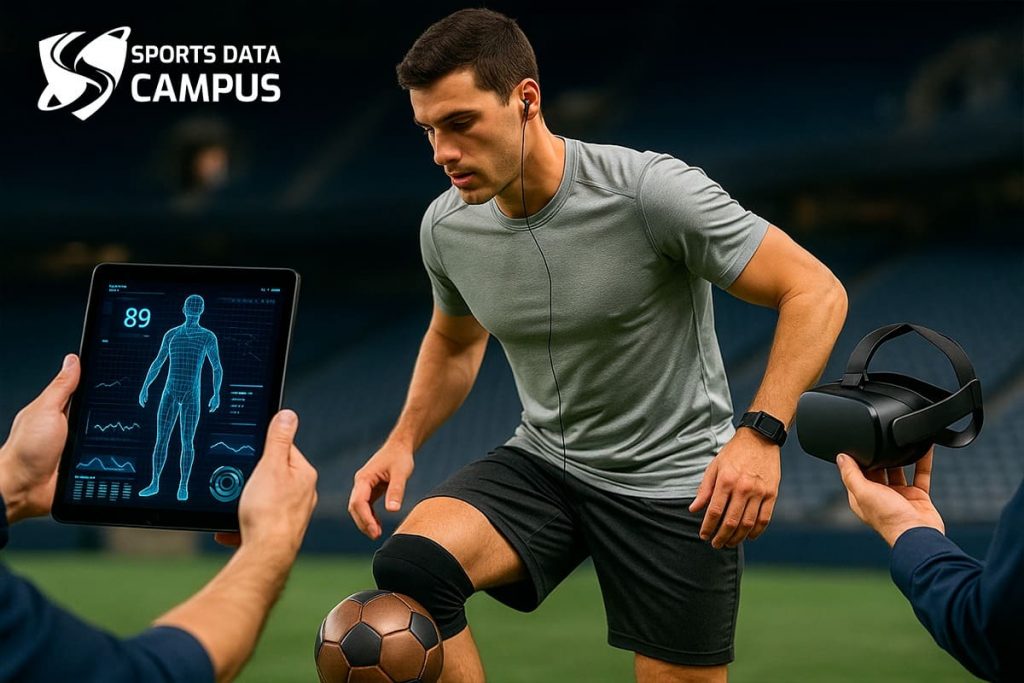
Virtual reality and augmented reality have become key tools within the ecosystem of emerging technologies in sport, especially for training and cognitive preparation. Their real strength lies in the ability to simulate real match scenarios without putting the athlete at physical risk or depending on external conditions.
Using VR headsets or AR apps projected onto the environment, athletes can repeat technical skills, face high-pressure situations or make tactical decisions in a fully controlled space. This immersive type of training sharpens decision-making, reduces physical fatigue and speeds up the acquisition of complex mental patterns.
Team sports use augmented reality to plan strategic movements on interactive boards or to analyse plays directly on the pitch in real time. In individual sports, it helps improve precision, anticipation and reaction by recreating competitive environments with impressive realism.
These technologies are also especially valuable in injury rehabilitation. By simulating movements without real load, they help athletes regain confidence and prepare for a progressive return to play. In education, they’re becoming increasingly common, as they speed up tactical and technical learning with better retention.
There are still challenges, such as cost or the need for specialised staff, but their impact on mental performance and tactical preparation is undeniable.
What are some of the latest technological breakthroughs in sport?
The rise of new digital solutions is driving a fresh phase in the evolution of emerging technologies in sport. In recent years, different tools have enhanced injury prevention, performance analysis and athlete recovery, creating safer, more efficient and more personalised environments.
In the area of injury prevention, biomechanical systems and motion sensors stand out. They analyse load patterns, posture and movement in real time, allowing coaches and medical teams to detect asymmetries or risks before an injury occurs. Telemedicine has also expanded access to healthcare professionals, making remote monitoring easier and speeding up interventions.
Data management has taken a major leap forward as well. Clubs now combine Big Data platforms with statistical engines and predictive models capable of assessing how workloads, training plans and micro-cycles affect performance. This analytical power turns every training session and every match into structured knowledge.
At the same time, nutrition and recovery are benefitting from advances such as smart fabrics that monitor temperature and sweating, or personalised electrostimulation systems. These innovations help optimise recovery after exertion and tailor interventions to each athlete’s physiological profile.
None of these advances work in isolation. Together, they shape a sporting environment that is more scientific, more connected and far more responsive to the demands of modern performance.
What innovations are we seeing in sport?
Within the wide range of emerging technologies in sport, a number of innovations are reshaping the rules of the game thanks to their direct impact on physical preparation, safety and the athlete–technology interaction.
Smart sports equipment is one of the most disruptive advances. Clothing with embedded sensors, insoles that measure plantar pressure or helmets that detect impacts don’t just collect information – they also generate real-time alerts. This technology provides accurate data on movement biomechanics, helping teams make preventive decisions during training or competition.
At the same time, advanced biomechanics solutions are taking performance analysis to a new level. Through computational models, inertial sensors and 3D simulations, coaches and sports health specialists can break down every technical movement and adjust variables to improve efficiency, reduce unnecessary load and prevent injuries. This holistic view of the body in motion allows for personalised routines and maximises physical potential safely.
Another growing area is interactive user interfaces. From simulators that provide real-time feedback to platforms that blend gamification with personalised training, these tools not only improve performance but also boost motivation and engagement. The experience becomes more dynamic, enjoyable and athlete-centred.
Taken together, these technologies aren’t just incremental improvements – they represent deep transformations that strengthen the connection between the body, data and the competitive environment.
Understanding how to apply emerging technologies in sport is now a key skill for anyone who wants to lead its transformation from within
The evolution of sport is no longer measured only in records or trophies, but in the ability to integrate intelligence, science and technology into every decision. Understanding how to apply emerging technologies in sport is now a key skill for anyone who wants to lead its transformation from within.
The Master’s Degree in Sports Management and Innovation prepares you exactly for that. Throughout the programme, you’ll learn how to implement real technological solutions, master analytical tools, lead digital projects and become the driving force of change that clubs, organisations and companies in the sector are already looking for. Because the future of sport isn’t something you wait for – it’s something you design.
Fill in the form below and discover the Master’s Degree in Sports Management and Innovation to become part of the change.