

MASTER’S IN
ARTIFICIAL INTELLIGENCE
APPLIED TO SPORTS
Learn to apply Artificial Intelligence and data analytics to sports using Python, machine learning and deep learning. You will develop predictive models, analyse sports performance and transform data into strategic decisions for performance, injury prevention, scouting and sports management.
REQUEST INFORMATION
Next edition: 20/10/26 · Last scholarships available · Secure your spot today!
Training sports AI professionals
In the Sports Data Campus ecosystem
Master's degrees certified by UCAM
With our certified diplomas




Specialise in Artificial Intelligence applied to sports
The Master’s in Artificial Intelligence Applied to Sports prepares you to use AI and data to analyse performance and support decision-making across the sports industry. You will develop skills in machine learning, deep learning, Python and data analysis applied to performance, injury prevention, sports strategy and fan engagement.
Through practical projects, you will learn to:
- Develop machine learning and deep learning models using sports data.
- Analyse structured and unstructured data, including images, video and social media.
- Apply AI to sports performance, injury prevention and tactical-technical analysis.
- Use Python and data analytics to identify patterns and build predictive models.
- Transform data and model outputs into information that supports sports decision-making.
The programme combines technical training with practical applications of Artificial Intelligence in sports, preparing you to develop AI-based solutions for real challenges across the sports industry.
The company develops solutions designed to optimise decision-making, improve sporting performance, enhance talent identification and analysis, transform the fan experience, and create new opportunities for growth and business. Its proposition combines Plexus Tech’s technological capabilities and expertise in digital transformation with Olocip’s specialised knowledge of Artificial Intelligence applied to sport, helping sports organisations successfully address the challenges of an increasingly digital, connected and competitive industry.
Is the Master’s in Artificial Intelligence Applied to Sports right for you?
The Master’s in Artificial Intelligence Applied to Sports is designed for professionals who want to specialise in Artificial Intelligence, machine learning and data analysis applied to sports.
This Master’s is for you if you:
- Have a background in engineering, mathematics, statistics, technology or programming and want to apply your technical skills to the sports industry.
- Work as a data analyst or IT professional in a sports club, federation or organisation and want to integrate Artificial Intelligence into your work.
- Want to develop machine learning and deep learning models to analyse sports performance and support data-driven decision-making.
- Want practical experience with Python, sports data and Artificial Intelligence applied to performance, injury prevention, sports strategy and event management.
- Want to specialise professionally in AI in sports and develop technical skills for projects within clubs, federations and sports organisations.
The programme is particularly suited to candidates with a technical or analytical background who want to connect Artificial Intelligence and data with real applications in the sports industry.
 UPON COMPLETING THE MASTER’S PROGRAM
OFFICIAL DUAL CERTIFICATION
Upon completing the master’s program, you will receive a dual certification awarded by UCAM and Sports Data Campus.

Official UCAM Certification
At UCAM, we have more than 20 years of experience in academic education. Our university has been recognised by prestigious international rankings, placing it among the top 10 universities in Europe for teaching quality, according to the Times Higher Education (THE) ranking. We are among the Spanish universities with the lowest dropout rates and the highest employability levels among students. At UCAM, we are constantly evolving and at the forefront of technology and tools to deliver a leading learning experience at both national and international level.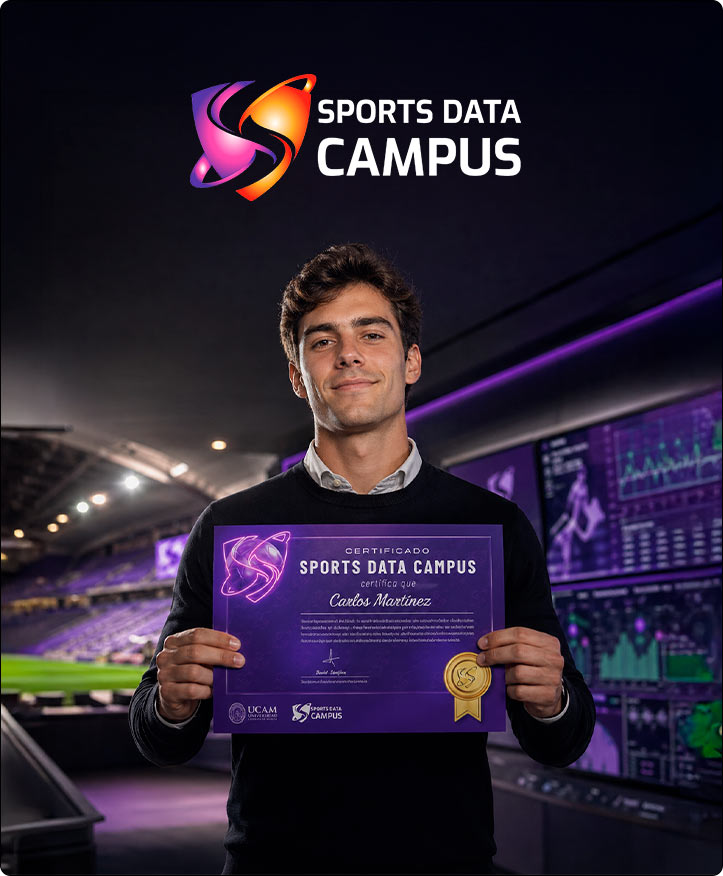
Official SDC Certification
Sports Data Campus is the leading school for specialised training in Big Data, advanced analytics and Artificial Intelligence applied to sport. We were created to respond to an increasingly clear reality: professional sport can no longer be understood without data. We train the professionals who lead change in clubs, federations, agencies and companies across the industry, combining strategic vision, practical application and a methodology aligned with the labour market. Our programs are designed to turn data into decisions, performance and competitive advantage. At Sports Data Campus, you do not just learn theory: you develop the skills that today’s sports industry demands to analyse, interpret and transform information into real impact. Because the future of sport is built with talent, technology and applied knowledge.
FROM ENROLMENT
CERTIFIED DIPLOMAS INCLUDED WITH YOUR ENROLMENT, VALUED AT OVER $5,000
You can obtain them from the moment you enrol until you complete the Master’s programme.

CERTIFIED DIPLOMA IN
Fundamentals of Football Analysis

CERTIFIED DIPLOMA IN
Sports Statistics with R

CERTIFIED DIPLOMA IN
Advanced Analytics with Python

CERTIFIED DIPLOMA IN
Fundamentals of Data Visualisation

CERTIFIED DIPLOMA IN
Generative AI Applied to Sport

CERTIFIED DIPLOMA IN
Soft Skills
DURING THE MASTER’S PROGRAM
COMPLEMENTARY TRAINING INCLUDED
We partner with leading companies in the sports industry to offer you the following certifications, helping you build a more competitive profile.
PROFESSIONAL INDUSTRY CERTIFICATIONS







IINS Recognition · March 2026
The Institute for Spanish Sports Quality grants this extraordinary distinction to Sports Data Campus, in recognition of its leadership, impact, and outstanding contribution to the strategic development of the sports ecosystem, and certifies that the institution meets the requirements and standards established for the sports quality seal.

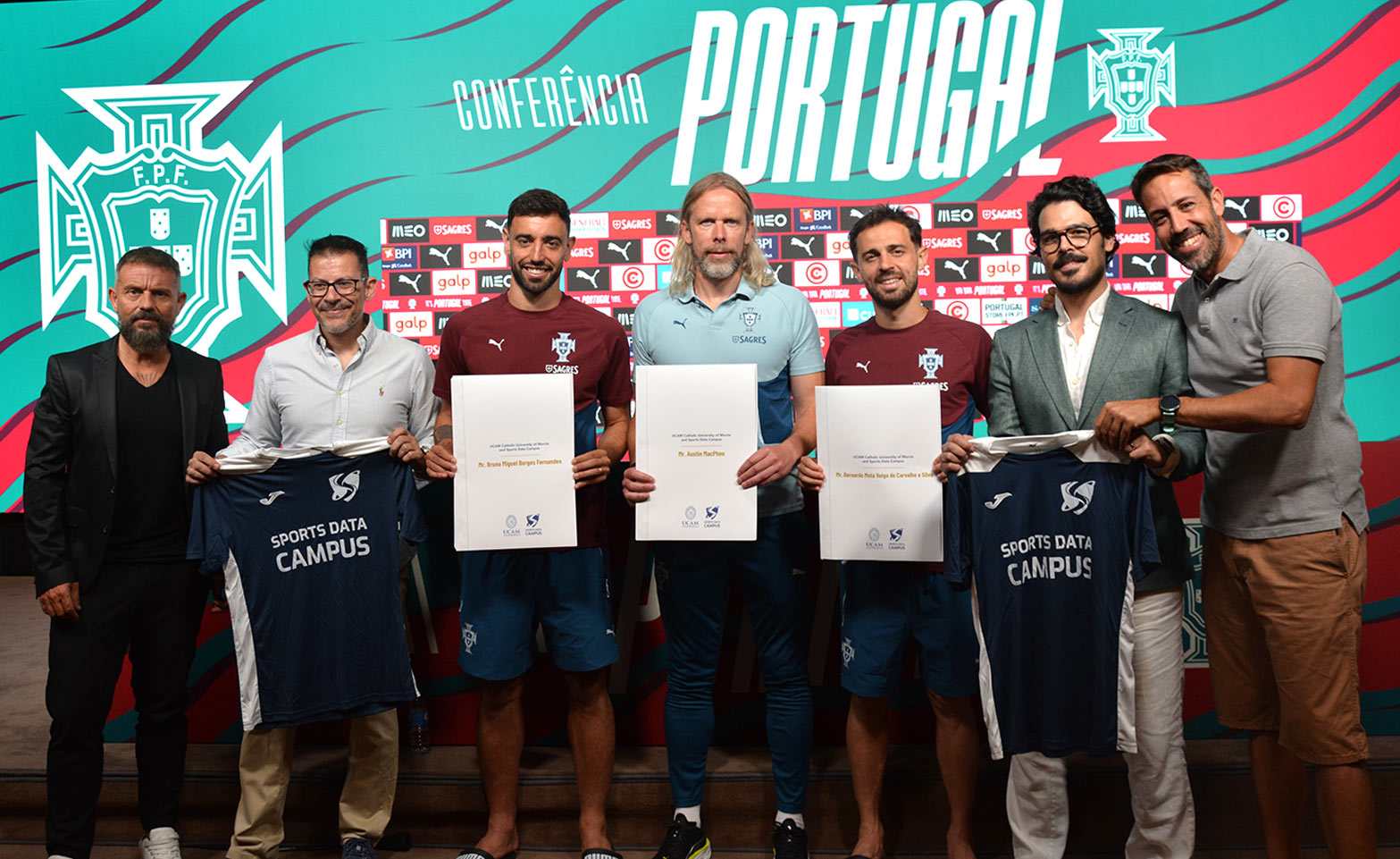
At Sports Data Campus, we sign the best instructors for you
Career Opportunities in Artificial Intelligence and Sports
Graduates of the Master’s in Artificial Intelligence Applied to Sports develop skills for professional roles combining Artificial Intelligence, data science and technology across sports clubs, federations, companies and other sports organisations.
Collects, analyses and interprets data from athletes, teams and competitions to uncover valuable insights into performance, strategy and sports trends.

Applies advanced data analytics and Artificial Intelligence techniques to develop predictive models and solve specific challenges within the sports industry.

Creates applications and technological solutions to improve training, team management, performance analysis and the spectator experience.
Plans, coordinates and supervises Artificial Intelligence projects applied to sports, ensuring effective delivery and the achievement of established objectives.
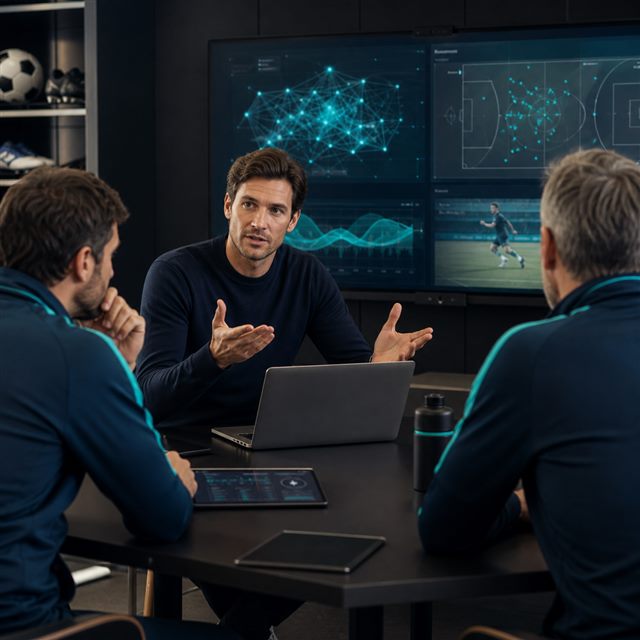
Advises clubs, federations and sports companies on the strategy, selection and implementation of Artificial Intelligence solutions across their processes and operations.
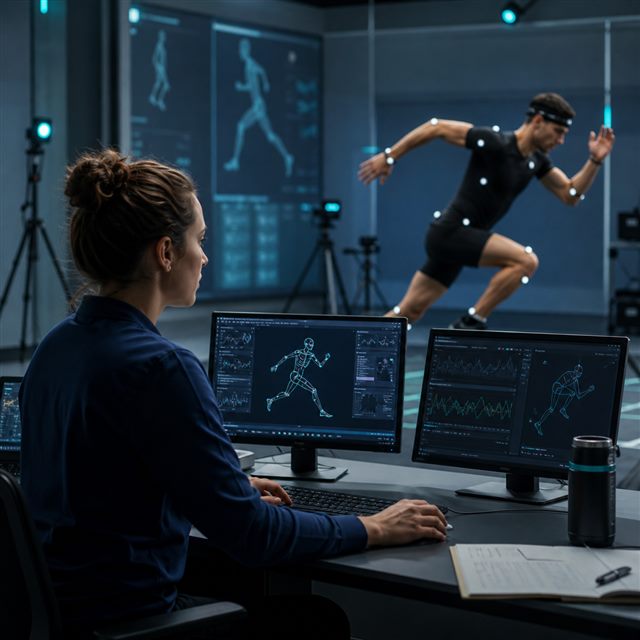
Researches and develops new Artificial Intelligence techniques, models and applications to advance knowledge and innovation in sports.

Develops and deploys machine learning and deep learning models using sports data for performance analysis, injury prevention, prediction and decision-making.
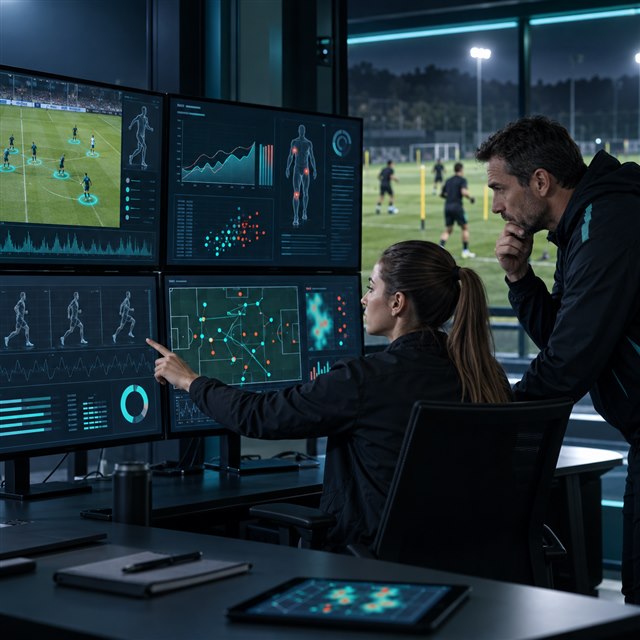
Uses Artificial Intelligence, sports data and predictive models to analyse athlete and team performance, identify patterns and support training and competition decisions.

Combines Artificial Intelligence with performance, operational and business data to generate strategic intelligence for clubs, federations and sports organisations.
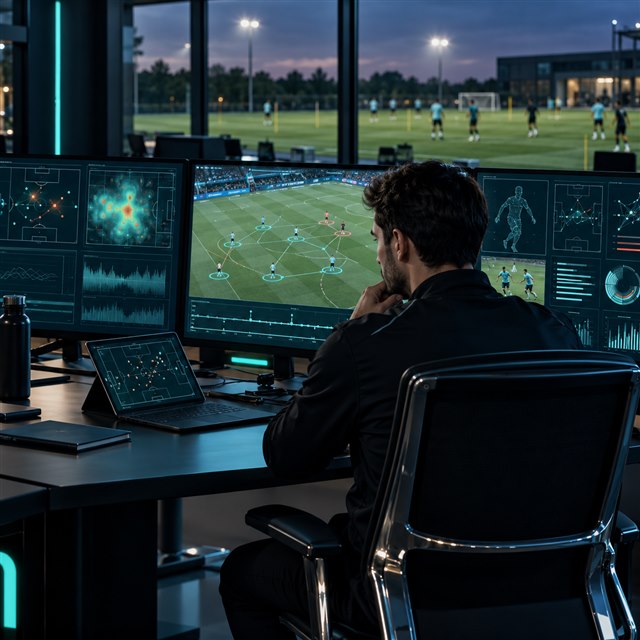
Integrates tactical, technical, physical and contextual football data to identify patterns, assess opponents and provide actionable intelligence to sporting departments.

Applies AI, player data and predictive modelling to identify talent, compare profiles, assess potential and support evidence-based recruitment decisions.

Combines physical, technical, tactical and contextual data to explain performance, detect risks and provide coaches with actionable recommendations.

Develops automated video-analysis and player-tracking solutions that extract movement, positioning and event data from training and competition footage.
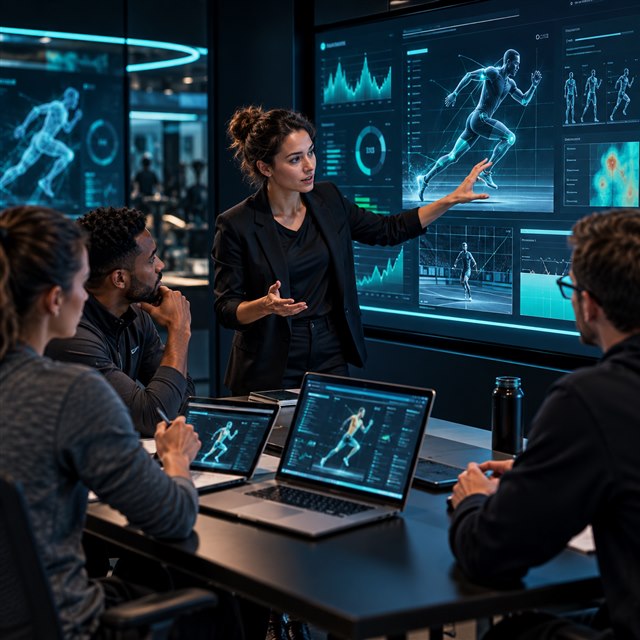
Defines and leads the development of AI-powered sports products, connecting user needs, sporting expertise, data teams and technology delivery.

Leads digital and AI transformation programmes, modernising processes, integrating data systems and driving technology adoption across sports organisations.
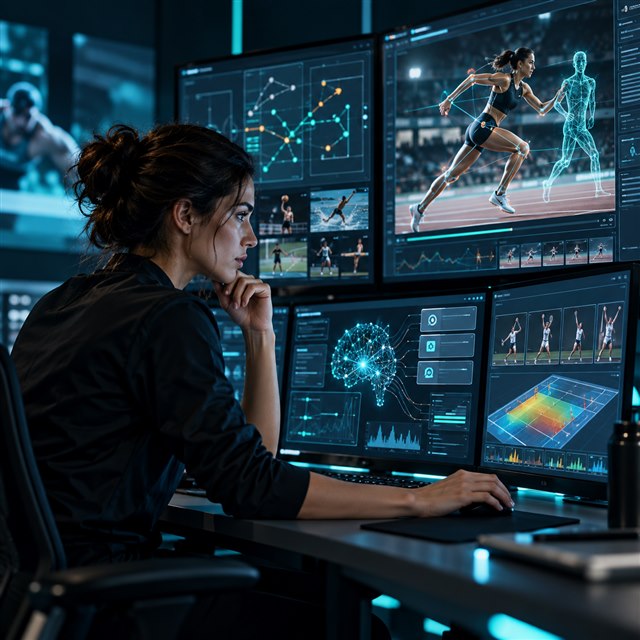
Designs generative AI solutions for sports analysis, knowledge management, reporting, content creation and intelligent assistance while ensuring reliable outputs.

ACCESS TO THE INTERNATIONAL PROGRAM IN
SCHOLARSHIPS
Access the international scholarship programme for the Master’s in Artificial Intelligence Applied to Sports and discover the available funding options to specialise in Artificial Intelligence, data analytics and predictive modelling applied to sports.
Why Study the Master’s in Artificial Intelligence Applied to Sports?
The Master’s in Artificial Intelligence Applied to Sports enables you to specialise in Artificial Intelligence and data analytics in sports, using Python, machine learning and deep learning to solve real challenges across the sports industry. You will learn to develop predictive models, analyse performance data and work with images, video and other data sources to support decision-making, injury prevention, scouting and sports management.
Por que fazer o nosso Mestrado?
Realizar um mestrado no Sports Data Campus permitir-te-á formar-te com especialistas do setor, adquirir ferramentas avançadas para gerir e analisar dados aplicados ao desporto, e destacar-te num mercado em constante evolução que exige profissionais altamente capacitados

UNIQUE EDUCATION
Exclusive, industry-focused content

LEADING CAMPUS
A global community focused on Big Data and sports

OVER 3,100 STUDENTS
Professionals trained across major leagues and sports

REAL PARTNERSHIPS
Over 100 professional clubs and teams

CONTINUOUS SUPPORT
We are always available to support you

NETWORKING
Discover opportunities within our professional community

OFFICIAL CERTIFICATION
Master’s degree certified by UCAM

TOP FACULTY
Masterclasses and exclusive events with industry experts

SCHOLARSHIPS
Discover our scholarship and study support programme

PROFESSIONAL PORTFOLIO
Build a portfolio through your final project and practical work
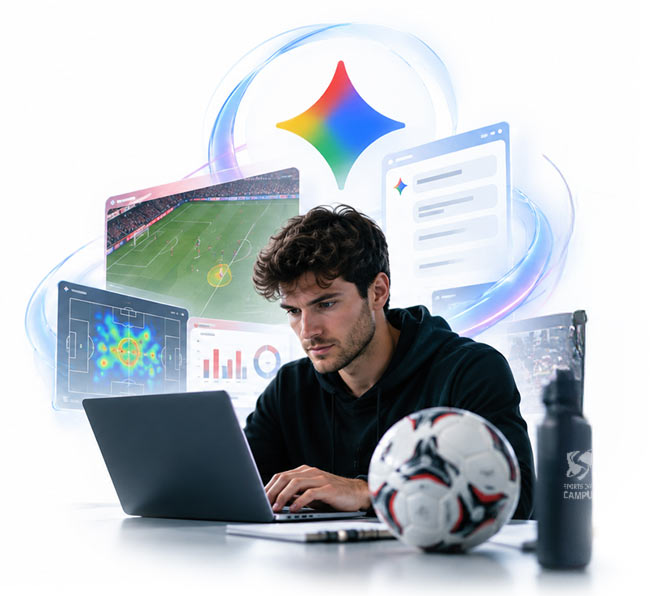
Free access to Google AI Plus
Research and
prepare better
Advance your
career
Create content
effortlessly
400 GB of
storage

What We Offer
Programme of the Master’s in Artificial Intelligence Applied to Sports
The Master’s in Artificial Intelligence Applied to Sports combines Artificial Intelligence, machine learning, deep learning and advanced data analytics with practical applications in the sports industry. The programme focuses on using sports data to develop predictive models, analyse performance and build AI-based solutions for real sporting challenges.
VACIO
MÓDULO 1. ARTIFICIAL INTELLIGENCE AS A DIFFERENTIATING VALUE IN THE SPORTS INDUSTRY (4 ECTS)
This module provides an in-depth introduction to Artificial Intelligence and Big Data applied to sports, in collaboration with Plexus Sport.
Students will learn how AI transforms decision-making, optimizes performance, and enhances sports management through real-world cases and practical tools. The module addresses challenges in managing sports data by integrating sources such as GPS, eventing, and retail, and explores solutions for analyzing large volumes of data. Taught by Plexus Sport experts, the module combines theory and practice to demonstrate how AI provides competitive advantages in the sports industry.
- Introduction to Artificial Intelligence
- Digital transformation and the AI ladder
- Machine learning
- AI projects and applications in sports
- Action value and predictive scouting in football
MODULE 2. DATA SOURCES AND ETL TECHNIQUES IN THE SPORTS FIELD (6 ECTS)
This module focuses on key techniques and tools for acquiring, processing, and managing sports data, covering the ETL cycle (Extraction, Transformation, and Loading) and access to various sources such as databases and APIs.
Students will learn to work with formats like Excel, XML, JSON, and CSV, and to use data from providers such as Opta, Statsbomb, or Wyscout.
The module explores how to transform raw data into strategic insights using analytical tools to create heatmaps, clusters, or xG models, emphasizing the practical value of real-time sports analysis.
-
Introduction to Data Sources and Providers
-
Use and Management of Databases
-
Data Extraction Techniques (ETL)
-
Data Security and Privacy
-
Data Integration and Quality
MODULE 3. BUSINESS INTELLIGENCE AND STORYTELLING IN SPORTS (6 ECTS)
This module explores the application of Business Intelligence in sports, focusing on advanced data visualization and storytelling to optimize performance and management.
Students will learn to use tools like Power BI, Tableau, and Python to create interactive and customized visualizations, translating technical data into clear, actionable insights.
The goal is to equip students with the skills to effectively communicate results and support strategic decision-making in technical-medical and sports management environments.
-
Fundamentals of Business Intelligence and Statistics
-
Visualization and BI Tools
-
Effective Communication and Data Storytelling
-
Advanced Sports Analytics
-
Research Methodology
MODULE 4. MACHINE LEARNING: SPORTS STRATEGY WITH SCIKIT-LEARN (7 ECTS)
This module introduces Machine Learning applied to sports, from foundational concepts to the implementation of models using Scikit-learn.
Students will learn to explore structured sports data, formulate hypotheses, and develop predictive models.
Key algorithms will be studied to analyze competitions and athletes, transforming data into competitive advantages and enhancing strategic decision-making.
-
-
Mathematical Foundations of Artificial Intelligence
-
Scikit-learn Library
-
Hyperparameter Tuning and Fine-Tuning
-
Exploration of Advanced Metrics
-
Machine Learning Model Lifecycle (End-to-End Machine Learning)
-
A/B Hypothesis Testing and Clustering
-
Feature Engineering and Linear Models
-
Predictive Models and Sports Analytics
-
Kaggle and GitHub Platforms
-
MODULE 5. DEEP LEARNING: DECODING DEEP LEARNING WITH TENSORFLOW AND KERAS APPLIED TO SPORTS (7 ECTS)
This module introduces Deep Learning as a key tool for analyzing complex and unstructured data in the sports field, using TensorFlow and Keras.
Students will learn how to build deep neural networks, apply techniques such as transfer learning and image classification, and address challenges like pose estimation and predictive analysis.
The module explores how Deep Learning complements traditional Machine Learning and how its use enhances tactical strategies, pattern recognition in gameplay, and decision-making based on large volumes of sports data.
-
Introduction to Neural Networks
-
Multilayer Perceptron, Backpropagation, and Gradient Descent
-
Convolutional Neural Network (CNN) Architectures and Autoencoders
-
Advanced Techniques for Sparse and Noisy Sports Data
-
Comparison Between Machine Learning and Deep Learning
-
Deep Learning Frameworks and Libraries
-
Use of Collaborative Development Platforms
MODULE 6. TELLING THE GAME: NLP FOR SPORTS INTELLIGENCE (6 ECTS)
This module explores the use of Natural Language Processing (NLP) in sports, from sentiment analysis on social media to the automatic generation of sports narratives.
Students will learn to apply advanced models (LLM, RAG) using frameworks like LangChain for tasks such as translation, content generation, and virtual assistants.
Through hands-on projects, students will develop solutions to analyze real-time textual data and enhance fan engagement, bringing strategic and innovative value to the sports environment.
-
Introduction to Natural Language Processing (NLP): Fundamentals and Applications in Sports
-
TensorFlow Text and PyTorch NLP
-
Text Preprocessing: Advanced Text Manipulation Techniques
-
Advanced NLP Models and Text Generation: Use of Large Language Models
-
Sentiment Analysis and Chatbot Implementation: Techniques for Fan Engagement
-
Sports Narrative and Report Automation: Automated Sports Content via NLP
-
NLP Technologies and Software: Tools and Libraries for NLP Development
-
Training and Fine-Tuning NLP Models: Customization and Deployment of Pretrained Models
MODULE 7. VISUAL STRATEGY: COMPUTER VISION WITH OPENCV, RESNET, AND YOLO APPLIED TO SPORTS (7 ECTS)
This module introduces computer vision as a key tool in sports analysis, enabling automatic detection of players, objects, and tactics through advanced metrics extracted from video.
Through practical cases and tools like OpenCV, TensorFlow, and PyTorch, students will learn to build models that interpret complex aspects of the game, such as off-ball movements and automatic tactical analysis.
The approach combines technical skills with innovative applications to transform how sports are trained, played, and analyzed.
-
Introduction to Computer Vision in Sports: Fundamentals and Historical Evolution of Computer Vision
-
Computer Vision Technologies and Tools
-
Practical Applications in Detection and Segmentation of Relevant Objects in Sports Events, Enhancing Understanding and Analysis of Gameplay and Athlete Performance
-
Implementation of Advanced Models – ResNet and YOLO: Details and Practical Applications
-
Video Analysis and Action Recognition: Techniques for Sports Video Analysis
-
Player Tracking and Motion Capture: Tracking Technologies and Motion Analysis
-
Innovation and Technology in Audiovisual Content: Computer Vision in Sports Broadcasting
MODULE 8. CREATING THE FUTURE: GENERATIVE AI IN SPORTS ACTION (7 ECTS)
This module explores how generative artificial intelligence is transforming sports through technologies such as GANs, Transformers, and autoregressive models, applied to synthetic content creation and game strategy simulation.
Students will learn to implement these tools with Python and libraries like TensorFlow, developing systems such as chatbots, simulators, and recognition algorithms.
It also covers vectorization techniques to model complex sports environments with multiple agents, along with the ethical and legal aspects of their application.
The module provides a solid technical foundation to apply generative AI in performance, tactical analysis, and personalization of experiences in sports.
- Introduction to Generative Artificial Intelligence
- Python and Machine Learning in Sports
- Concepts of Generative AI
- Relevant Technologies and Tools
- MLOps and Practical Applications of Generative AI
- Expanded Definition of Generative AI to Include Augmented Reality (AR) and Virtual Reality (VR)
- Ethics and Legality in Sports AI
MODULE 9. THE GREAT CHALLENGE: MASTER’S FINAL PROJECT (MFP) (10 ECTS)
This module promotes an entrepreneurial spirit and encourages the creation of creative solutions with real impact on the sports industry. Additionally, it integrates key concepts such as innovation, digital transformation, financial analysis, and evaluation of return on investment (ROI) in sports, providing a practical and strategic experience that prepares students to face real challenges with a transformative vision.
- Introduction to Carrying Out AI Projects in Sports
- Essential Guidelines for Project Organization
- Innovation and Digital Transformation
- Design Thinking and AI Innovation
- Financial Modeling and ROI Analysis with AI in Sports
- Execution of the Master’s Final Project
- Online Presentation
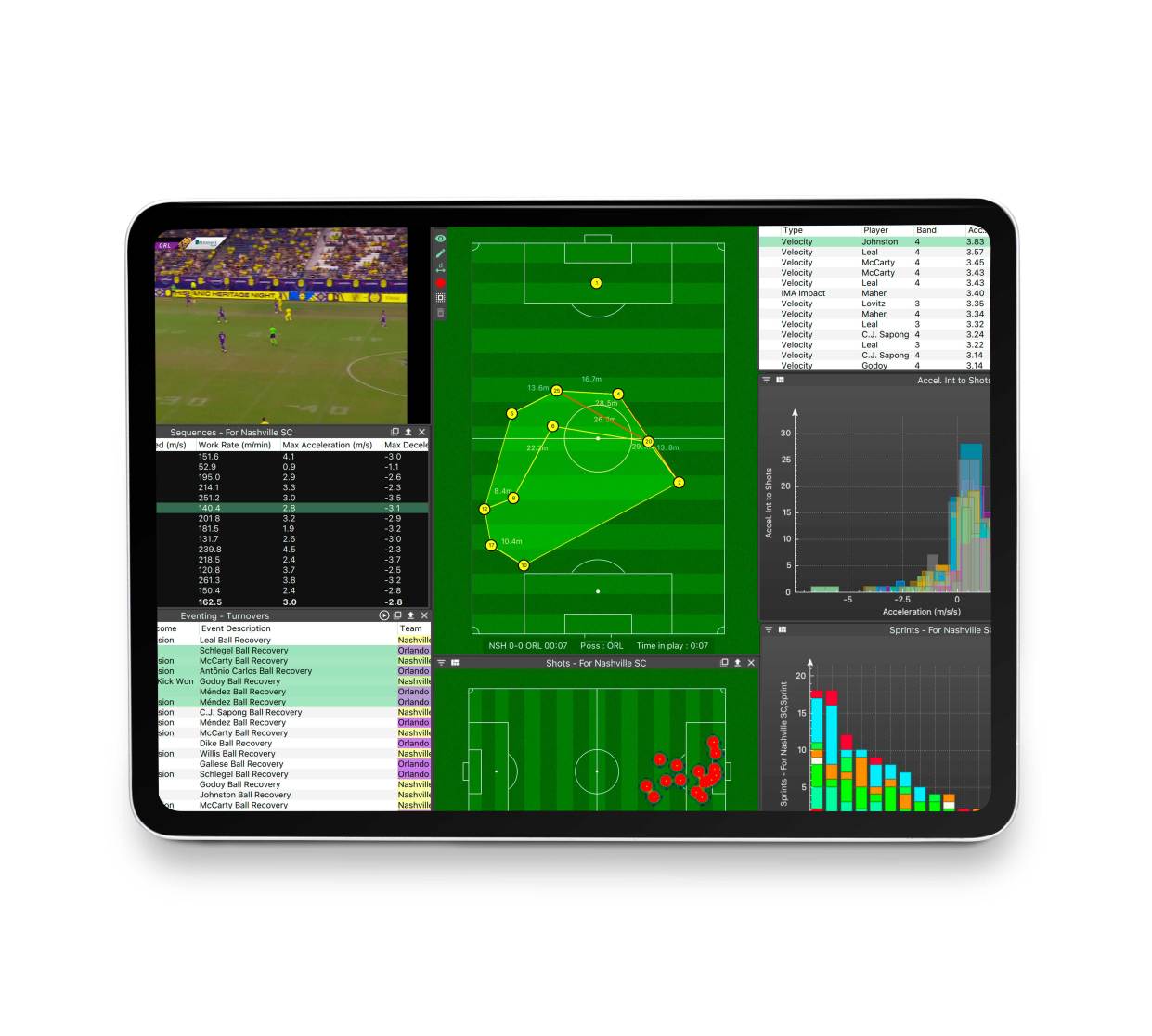
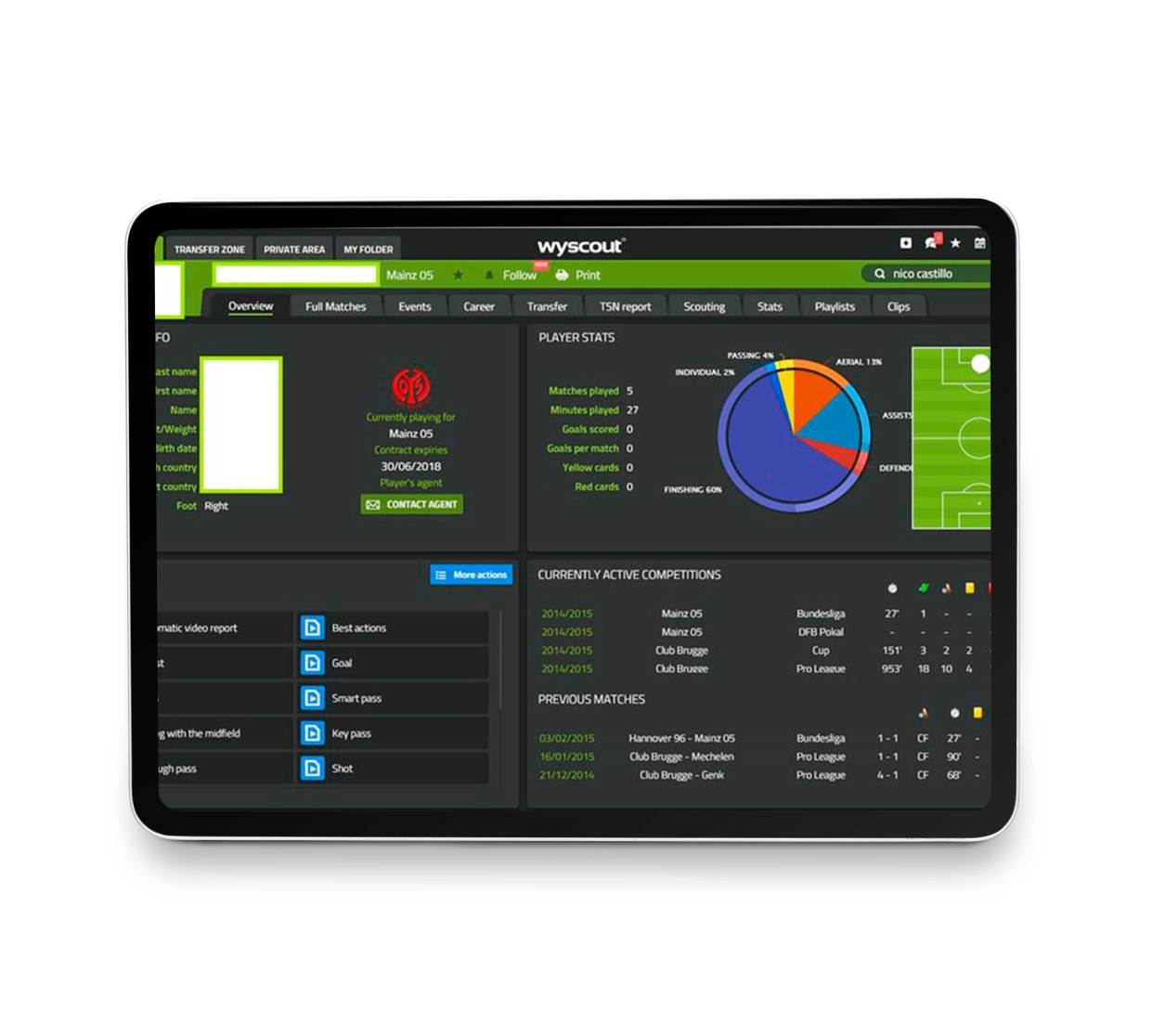
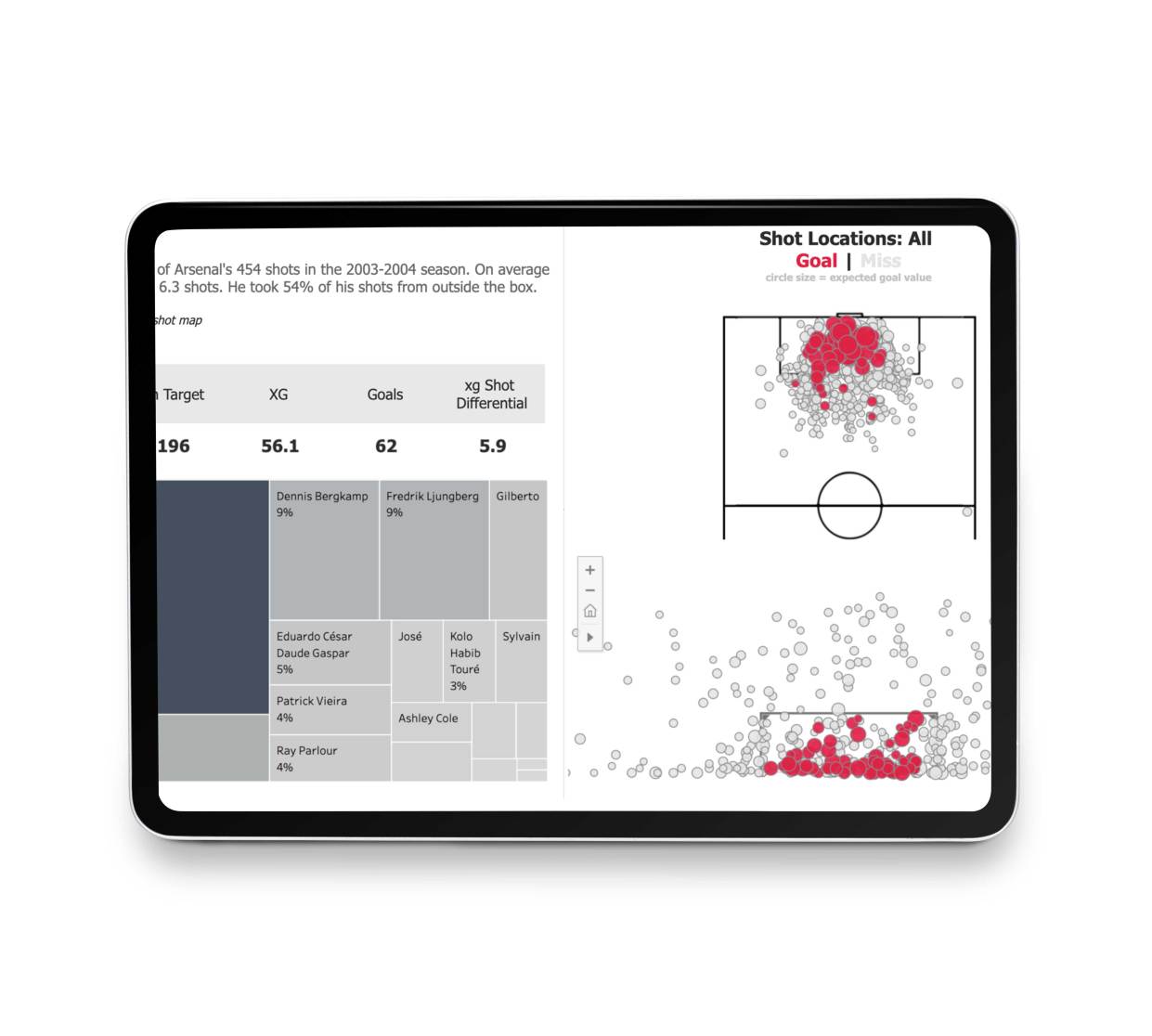
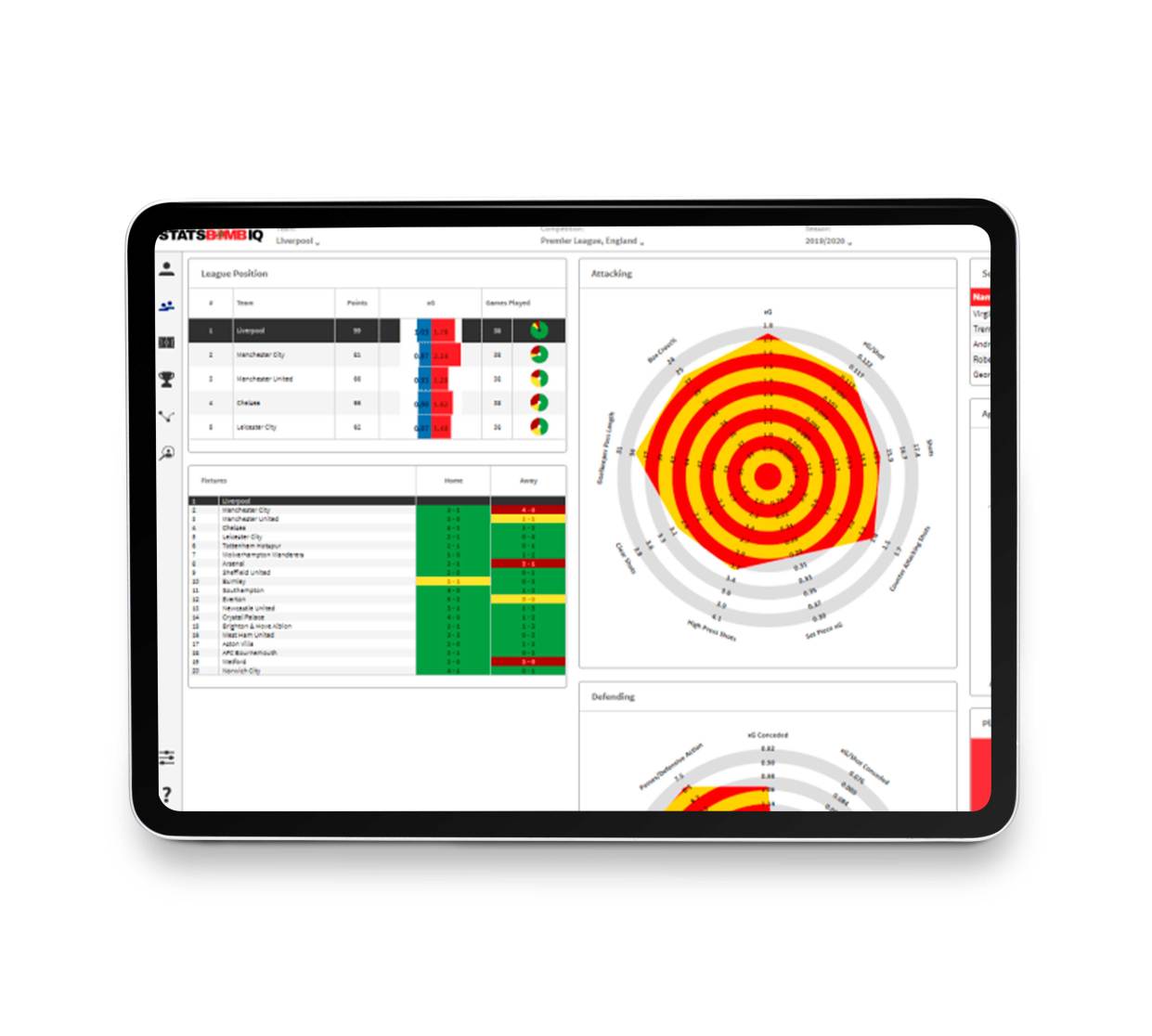
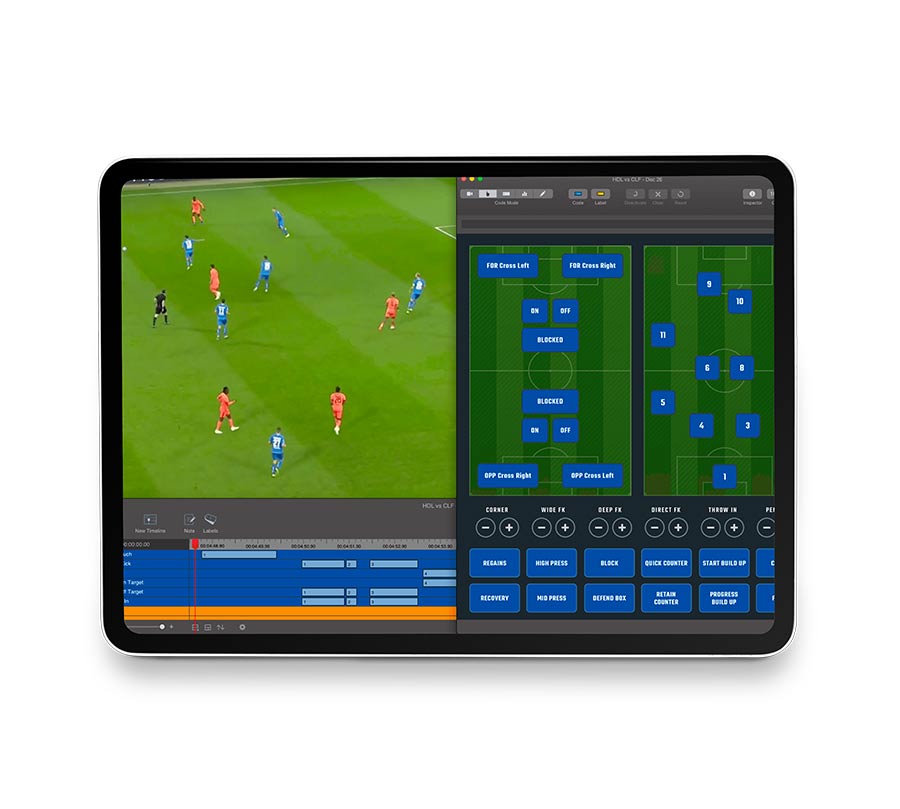
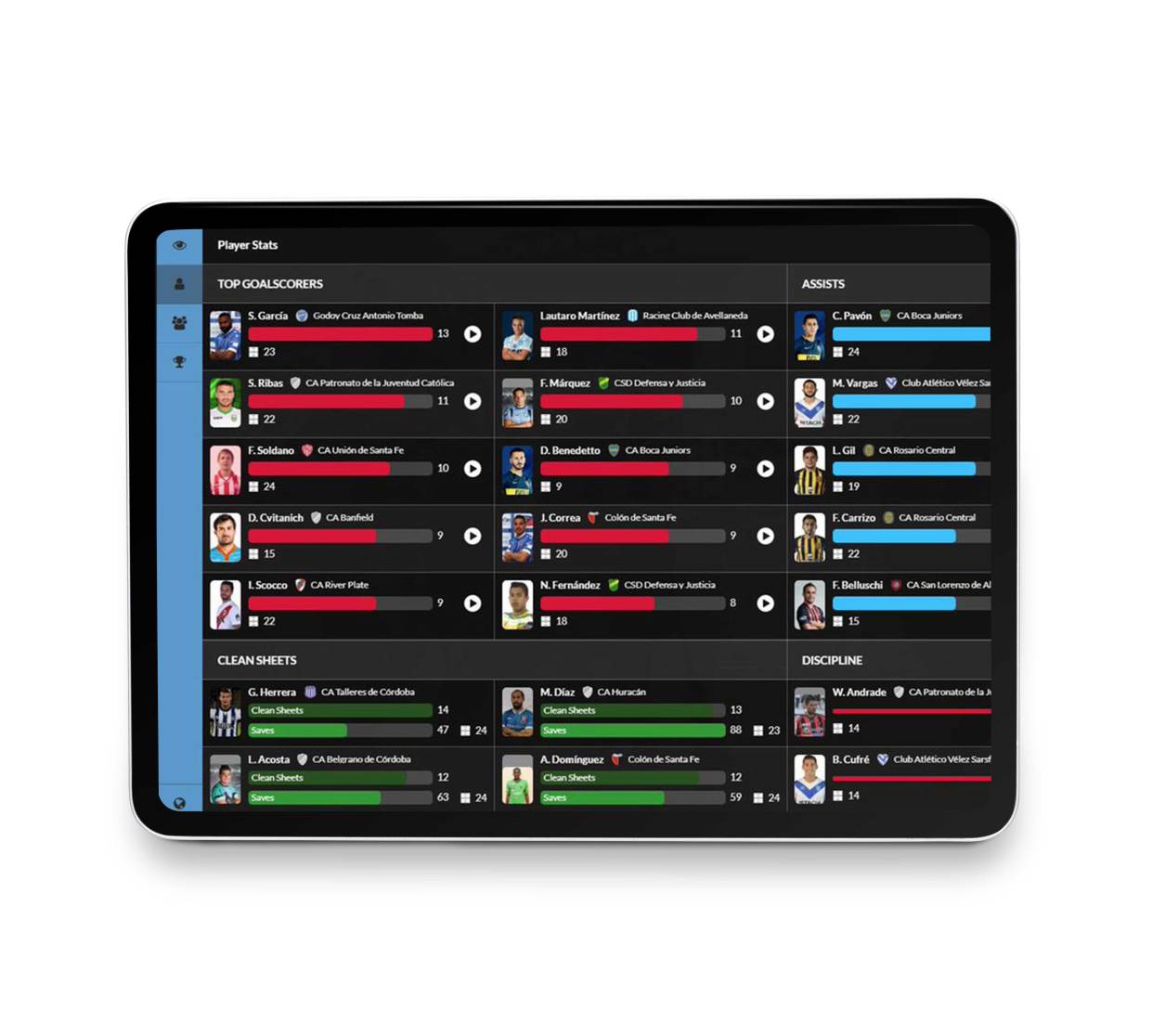
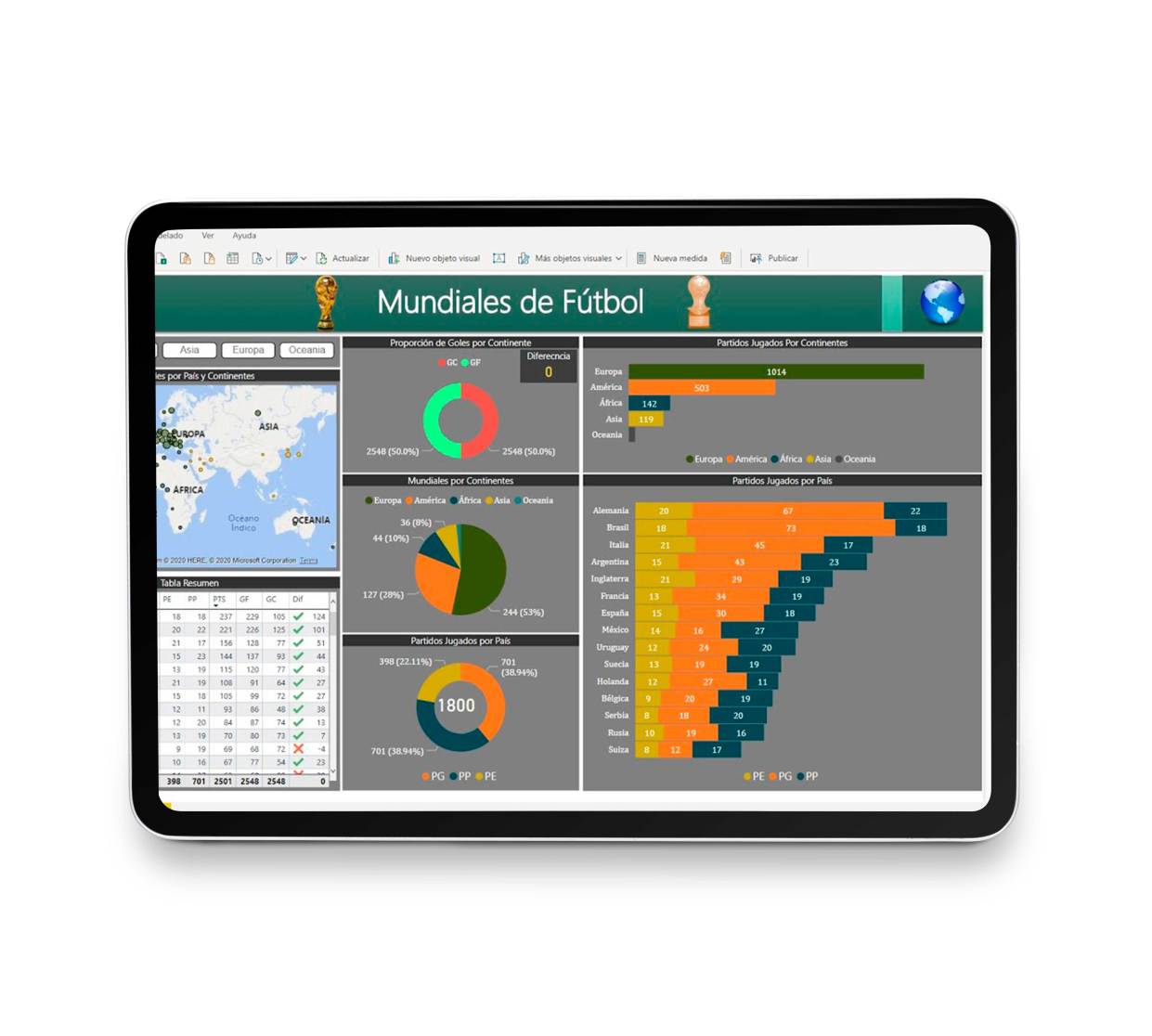
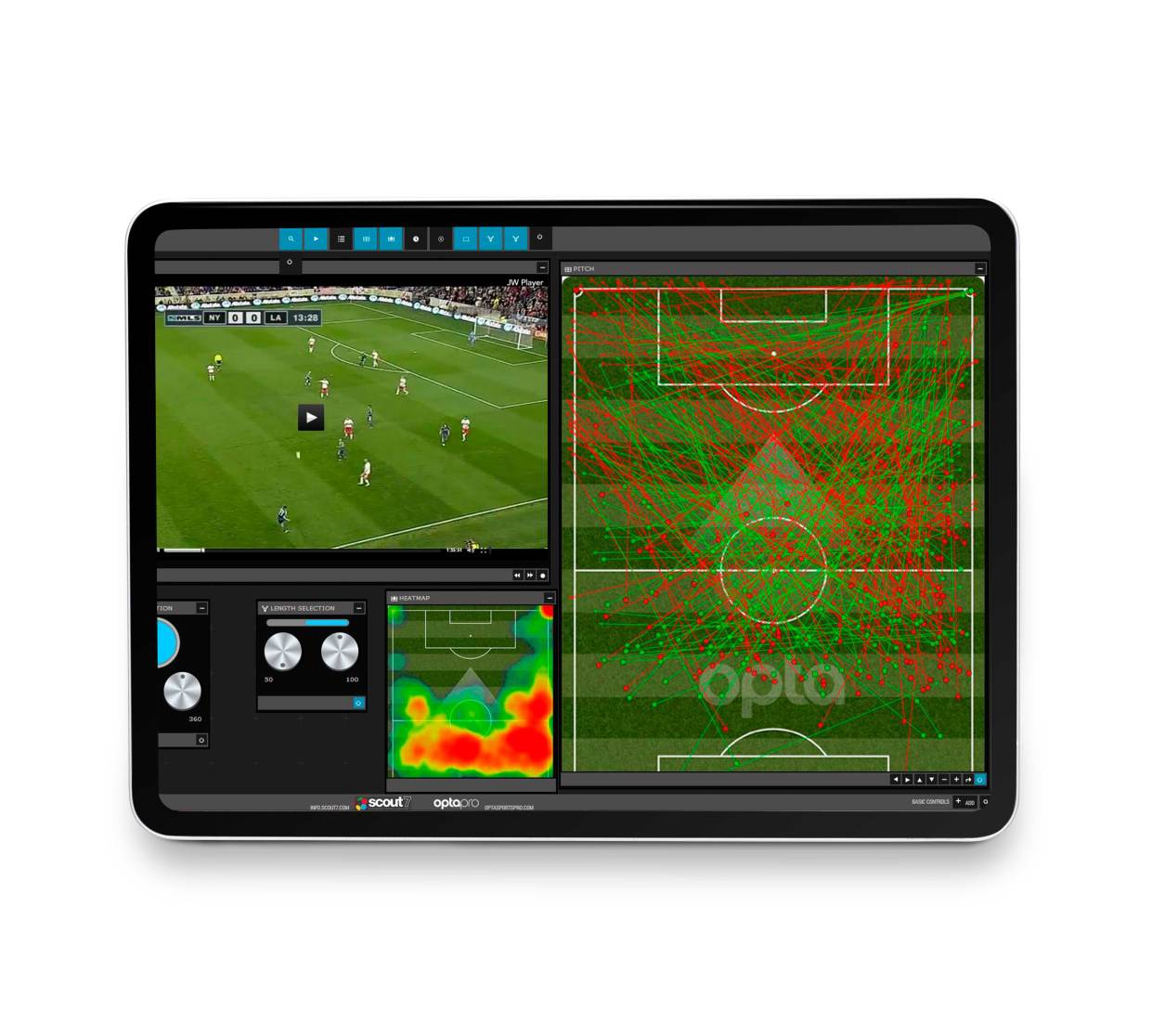
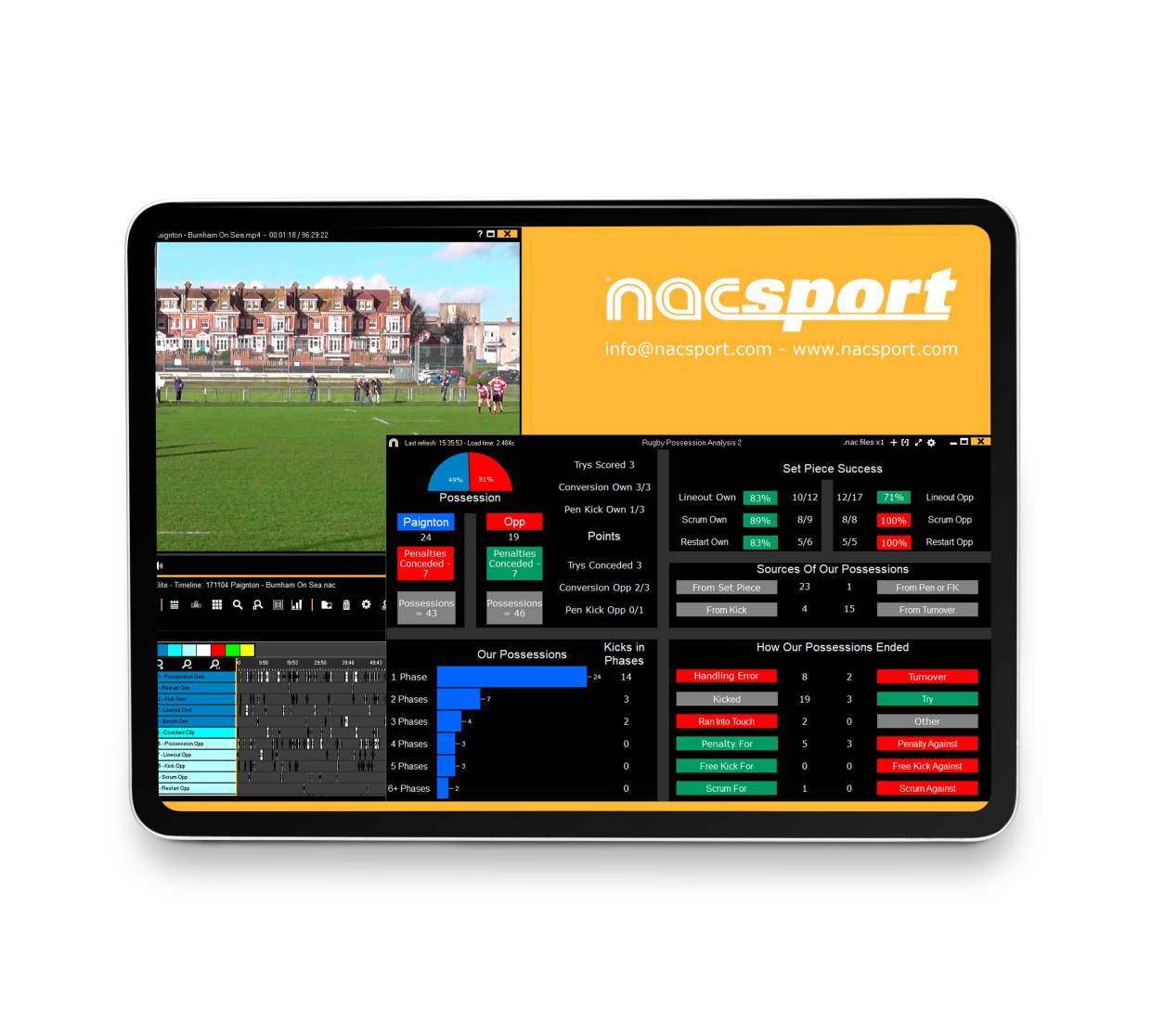
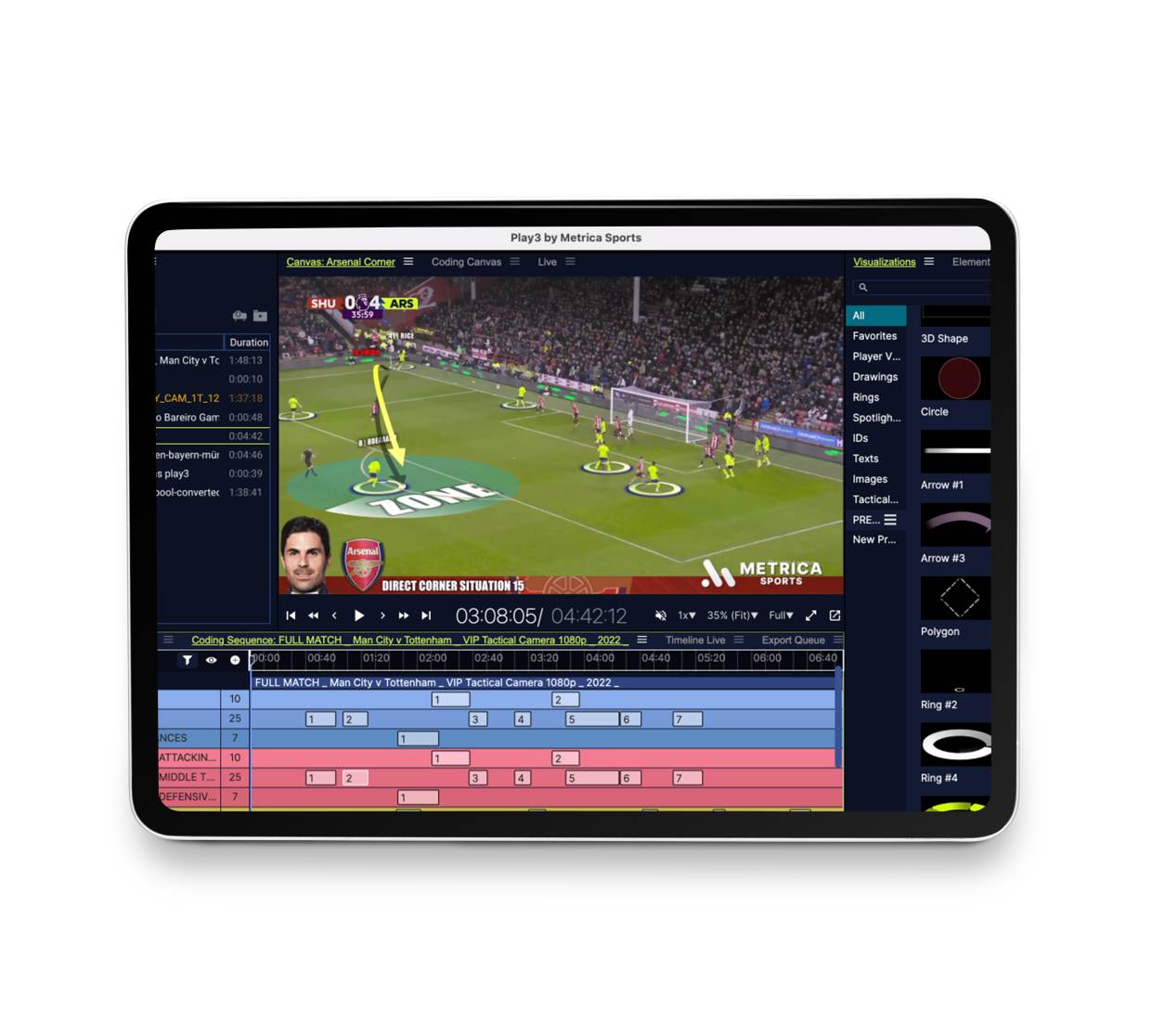
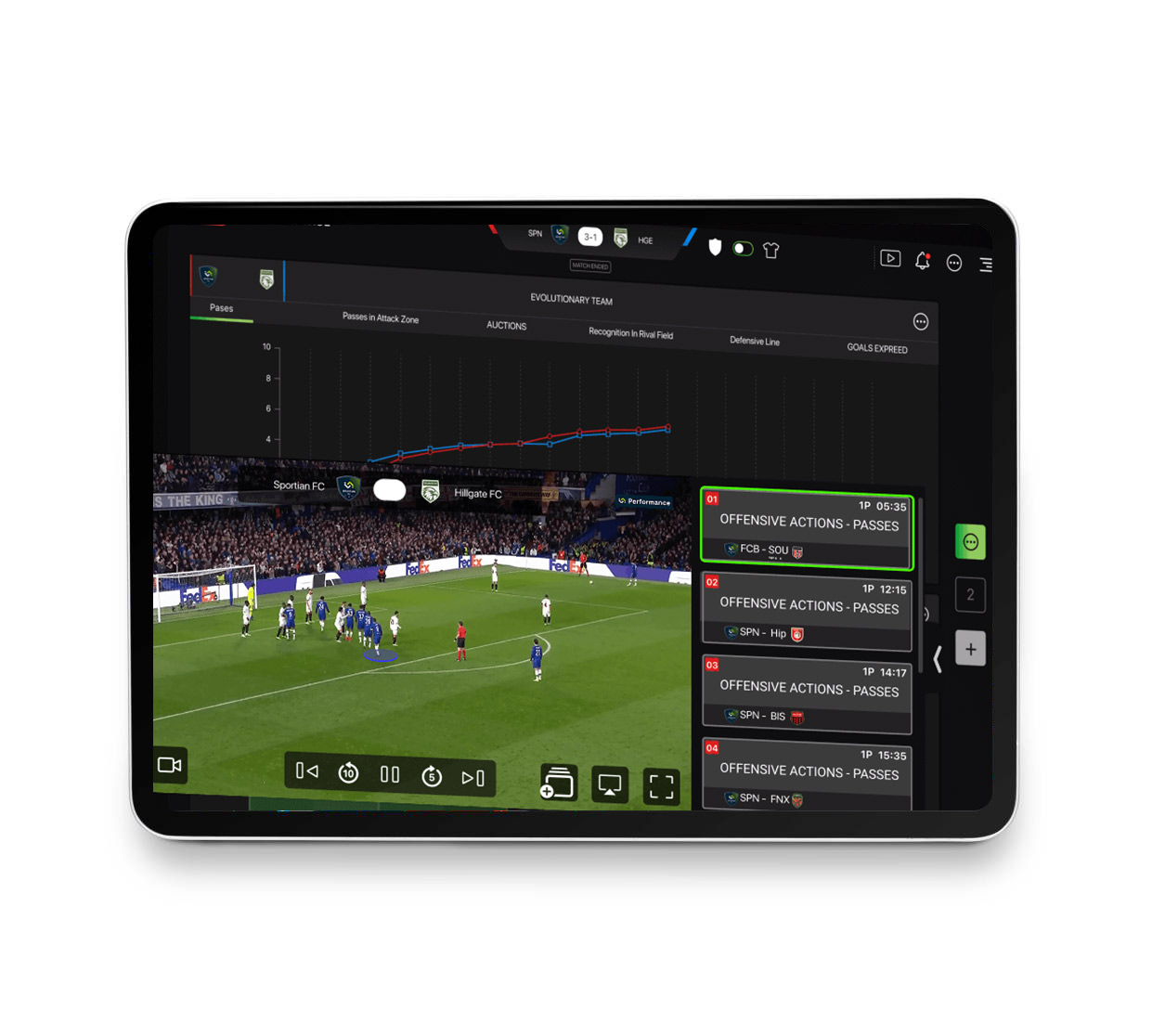
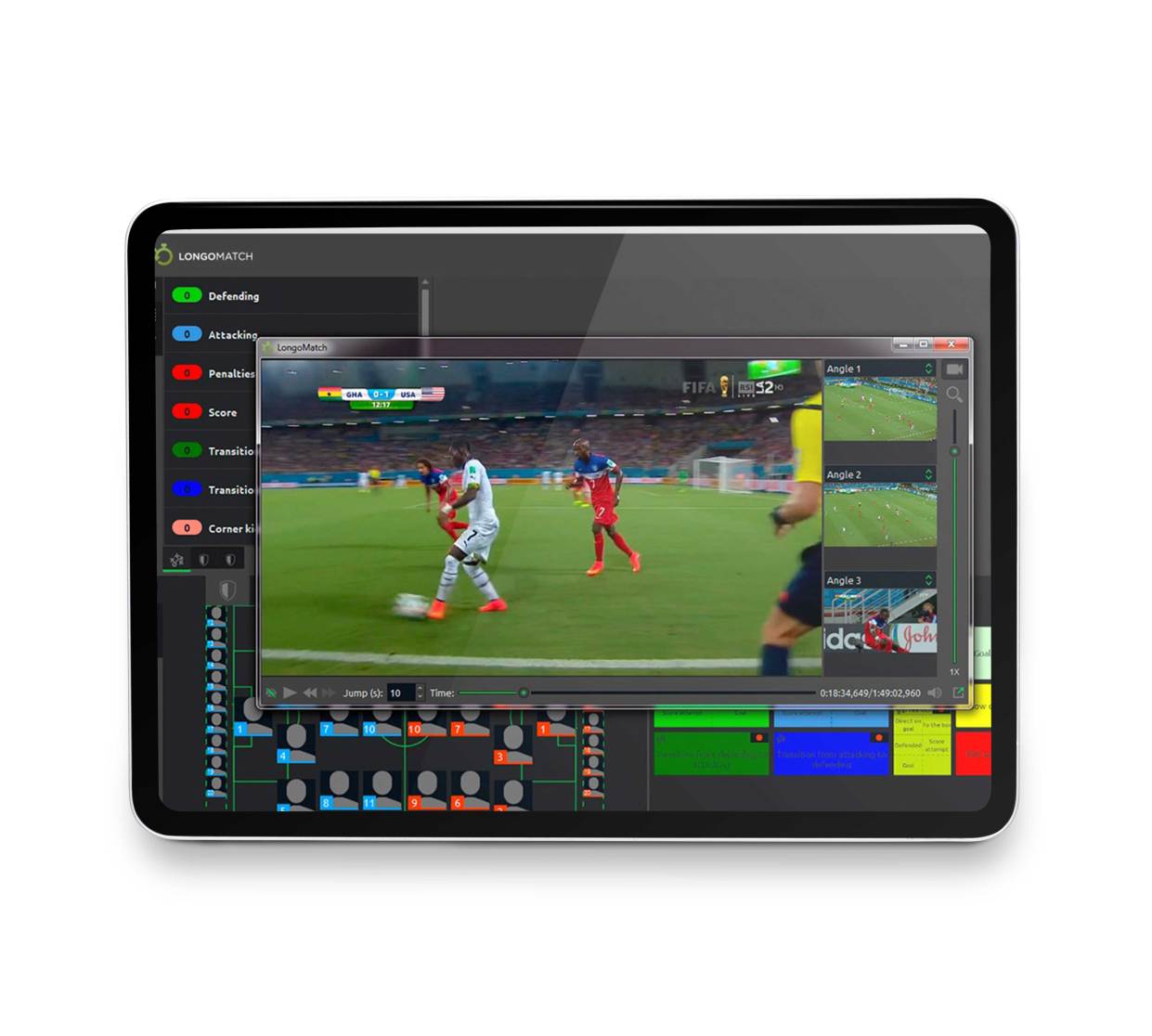
You will work with these providers of football data, tools, and video analytics platforms









ACADEMIC DIRECTION

Marco Benjumeda
Lead Data Scientist at Plexus Sport
PhD in Artificial Intelligence

Sergio Luengo
Lead Data Scientist at Plexus Sport
PhD in Artificial Intelligence

David R. Sáez
CEO at Sports Data Campus (ENIIT / Big Data International Campus)

André Silveira
Chief International Development Officer at Sports Data Campus
FACULTY
Top-tier faculty at your service
Sergio Luengo
Lead Data Scientist at Plexus Sport PhD in Artificial Intelligence
Marco Benjumeda
Lead Data Scientist at Plexus Sport PhD in Artificial Intelligence
Lucas Bracamonte
Department of Professional Development at Sports Data Campus

Jacinto Carrasco
Data Scientist Plexus Sport
PhD Inteligencia Artificial

David R. Sáez
CEO at Sports Data Campus (ENIIT / Big Data International Campus)
André Silveira
Chief International Development Officer at Sports Data Campus

Jorge Fernández
Data Scientist Plexus Sport
MSc Artificial intelligence

David Fombella
Consultor Big Data en StrateBI y Co-Director Académico
Fredi Martín
Professional Football Coach and Academic Director at Sports Data Campus
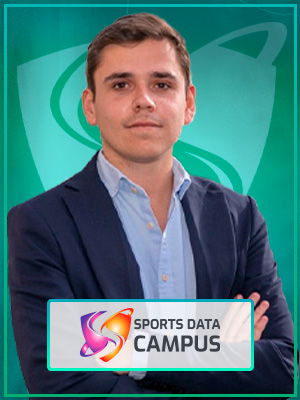
PABLO sanzol
Sports Technical Secretary at Deportivo Alavés
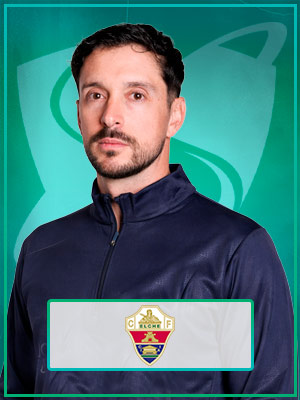
Cristobal Fuentes
Head of Performance at Elche F.C

Eduardo García
CEO & Founder at LeadBC Tech Consulting

Óscar Martín
CEO of Patrulla Mutante

Javier Fernández
Senior Data Scientist at Sportian

Javier Fernández
Software Developer & Consultant | Machine Learning | AI Innovator for Sports & Technology
MASTERCLASS
Professional analysts, sports directors, coaches, staff…

Esteban Granero
Founder and CEO of Plexus Sport

José David Poveda
Co-Founder of Horizm

Juan Iraola
Director of Digital Transformation at Grupo Baskonia Alavés

Pablo Galaz
Deputy Sports Manager at Club Universidad de Chile

Rodrigo Meruelo
CTO RCD Espanyol

Javi Mallo
Fitness Coach at Rayo Vallecano

Matías Conde
Data insights editoren Stats Perform

Montse García Bea
Elite Executive Account en Hudl-Wyscout

Ismael Fernández
PhD in Sports Science (CAFYD) and Co-Founder of ThermoHuman

Maurici A. López-Felip
CEO & Co-Founder of Kognia Sports Intelligence

José Rouzo
CEO at Oliver

Paul Neilson
Director of Performance SkillCorner

Luis Llagostera
CEO at Fly-Fut

Karen Reynoso
Sport Scientist at Hudl

Roberto Amorós
Data Scientist at LaLiga

Manel Lozano
Head of Mediacoach Support team.FIFA AGENT

Borja Gómez
Director of Bepro Spain

Juan Manuel Bello
Head of Football Operations Iberia at IMPECT

Josu Arregui
CEO at Voon Sports

Ray G. Butler
Member of the Data Science Team at Butler Scientifics

Miguel Ángel Campos Vazquez
Royal Spanish Football Federation

Sergio garcía
Member of the Data Science Team at Butler Scientifics

DIEGO VILCHES
Team leader Linti - Atenea Inteligenia deportiva

Gonzalo Zarza
CDO AT SPORTIAN

Nicolás Miranda
Sport Scientist at Catapult Sports

Pedro llamas
Account Cloud Engineering Vicepresident, South en Oracle

David Sánchez
CMO Golfmanager

Ricardo Molina
Founder & CEO en Scoutbasketball

Luis Mosquera Toscano
Product Manager Sports Analytics en Kinexon

Rafael Repiso Gómez
Processes and Digital Development Coordinator at Cádiz CF

Miguel almeida Ferreira
Scout at Club Sporting de Portugal

José María Cruz
R&D+i Manager at Sevilla FC Football

Mikel Gandarias
Member of the Sports Management Team at RCD Mallorca

Sergio Fernández
Sport Director Deportivo Alavés

Jorge Lorenzo
Founder & CEO en Basketouch Solutions Spain

Eugenio Alonso
Sales Manager at Stats Perform

Miguel Bullón
Director of Innovation at the Spanish Basketball Federation (FEB)

Alicia Arias
Customer Experience Manager at LongoMatch

Pablo Gutiérrez
Spanish Hockey Federation

Unai Ezkurra
Director of Processes and Big Data Football at RCD Espanyol

Pedro Viñaspre
Fundador y CEO de Fitness KPI
Do you want to work in professional environments?
Sports Data Campus Professional Extension
Sports Data Campus Professional Extension connects you with the job market. If you study one of our master’s programs, we help you take the next step in your career.
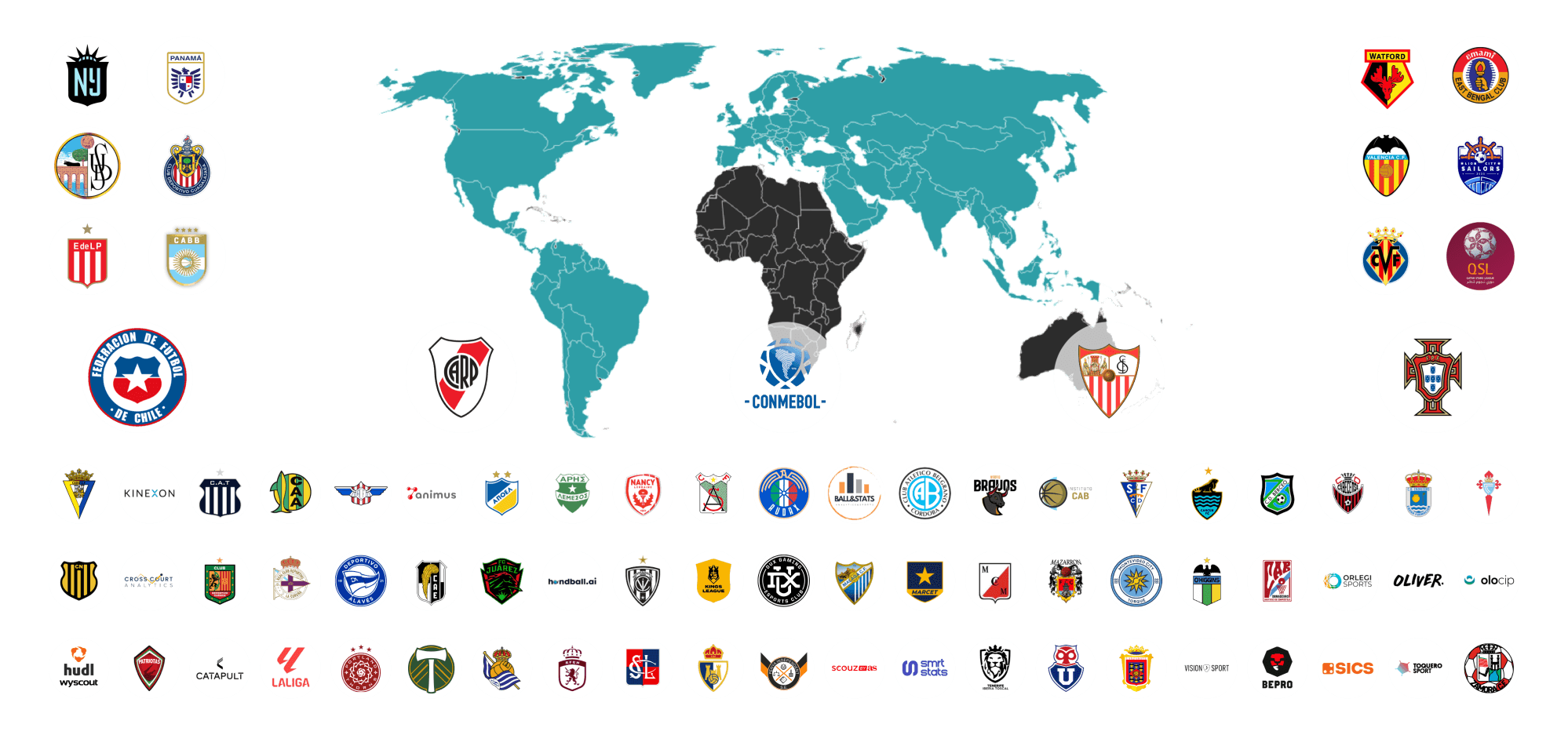
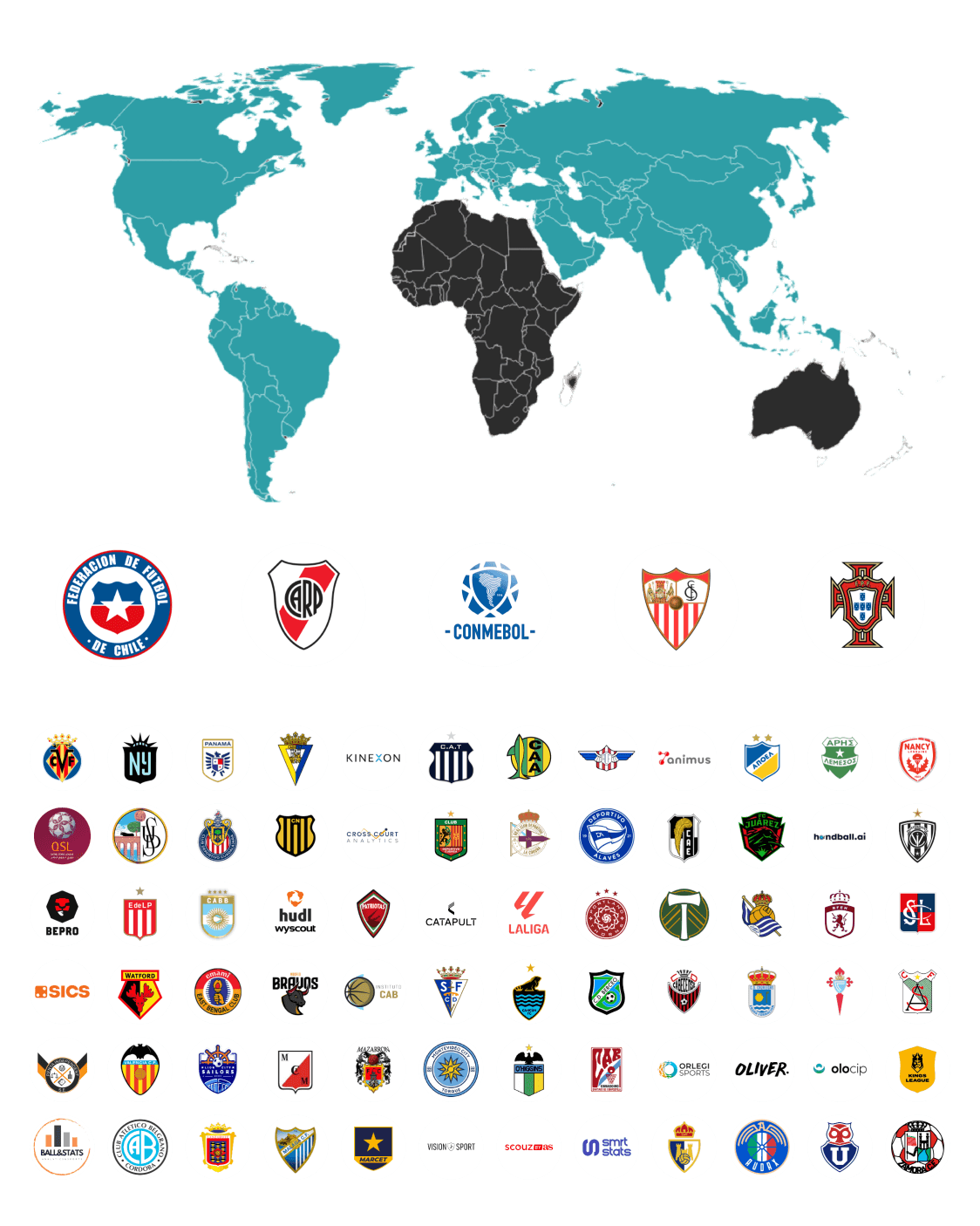
Because in collaboration lies strength
PROUD OF OUR NETWORK OF PARTNERS, WHICH CONTINUES TO GROW EVERY DAY
Clubs, Federations, Confederations and Sports Entities







































Companies and Industry
























































WHAT OUR STUDENTS SAY
We are extremely proud of every student who has trained at Sports Data Campus and is now part of this great family.
Thank you all for your effort and support! 🙂
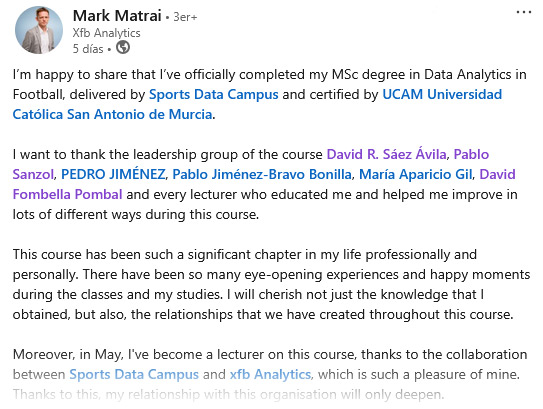
Mark Matrai
I’m happy to share that I’ve officially completed my MSc degree in Data Analytics in Football, delivered by Sports Data Campus and certified by UCAM Universidad Católica San Antonio de Murcia …
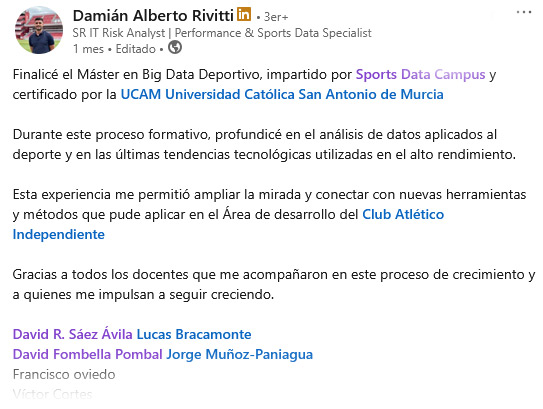
Damián Alberto Rivitti
Esta experiencia me permitió ampliar la mirada y conectar con nuevas herramientas y métodos que pude aplicar en el Área de desarrollo del Club Atlético Independiente.
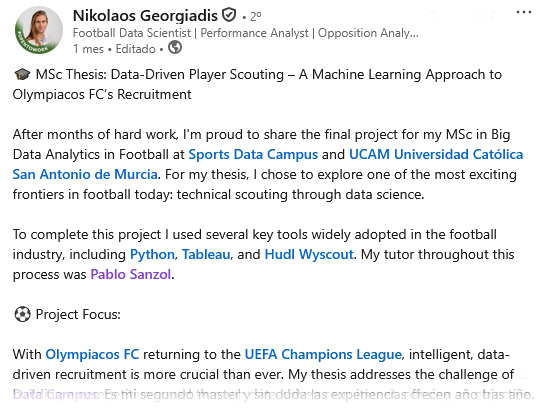
Nikolaos Georgiadis
After months of hard work, I’m proud to share the final project for my MSc in Big Data Analytics in Football at Sports Data Campus and UCAM Universidad Católica San Antonio de Murcia. …
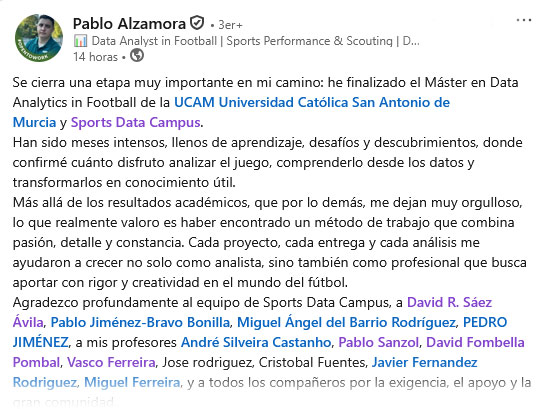
Pablo Alzamora
Han sido meses intensos, llenos de aprendizaje, desafíos y descubrimientos, donde confirmé cuánto disfruto analizar el juego, comprenderlo desde los datos y transformarlos en conocimiento útil.
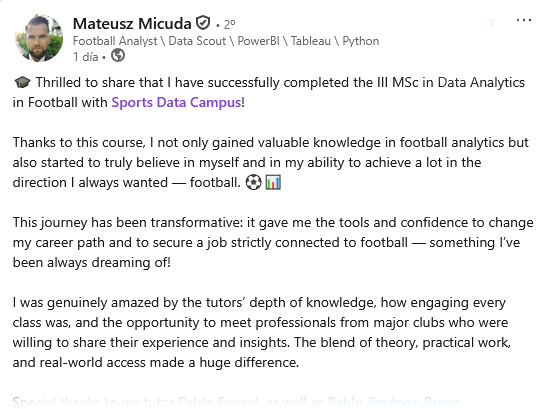
Mateusz Micuda
Special thanks to my tutor Pablo Sanzol, as well as Pablo Jiménez-Bravo Bonilla and Pedro Jiménez, who were always there to support us and offered a firm, positive push when needed
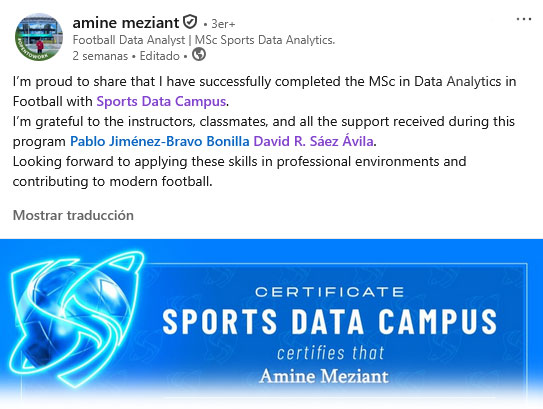
Amine meziant
I’m grateful to the instructors, classmates, and all the support received during this program Pablo Jiménez-Bravo Bonilla David R. Sáez Ávila.
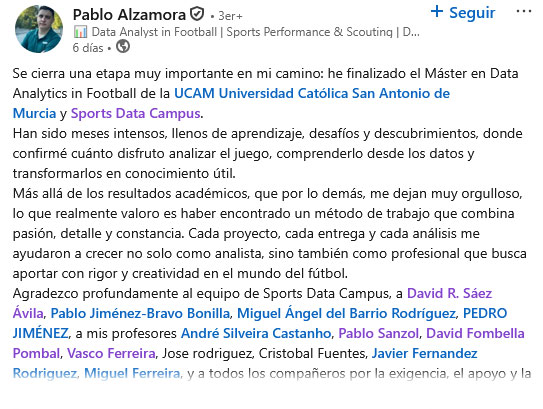
PABLO ALZAMORA
Agradezco profundamente al equipo de Sports Data Campus, a David R. Sáez Ávila, Pablo Jiménez-Bravo Bonilla, Miguel Ángel del Barrio Rodríguez, PEDRO JIMÉNEZ, a mis profesores André Silveira Castanho, Pablo Sanzol, David Fombella
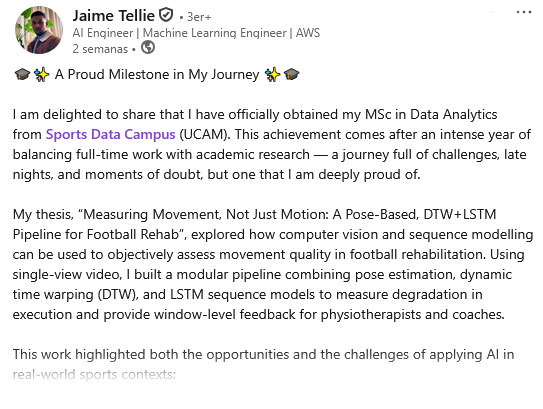
Jaime Tellie
I am delighted to share that I have officially obtained my MSc in Data Analytics from Sports Data Campus (UCAM). This achievement comes after an intense year of balancing full-time work with academic research — a journey full of challenges
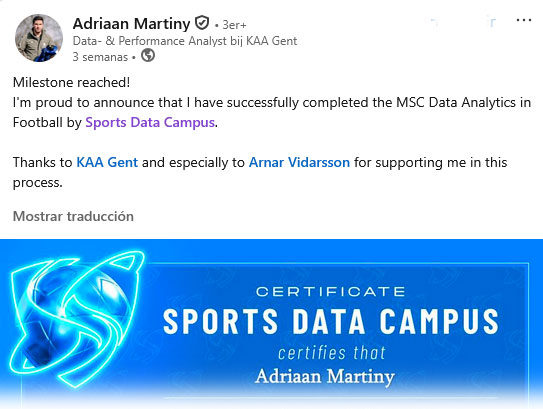
Adriaan Martiny
Milestone reached!
I'm proud to announce that I have successfully completed the MSC Data Analytics in Football by Sports Data Campus. Thanks to KAA Gent and especially to Arnar Vidarsson for supporting me in this process.
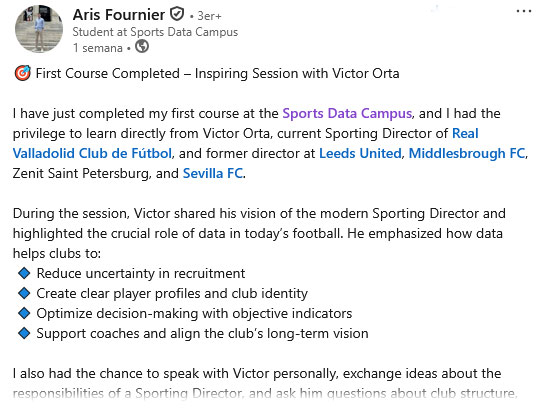
Aris Fournier
I have just completed my first course at the Sports Data Campus, and I had the privilege to learn directly from Victor Orta, current Sporting Director of Real Valladolid Club de Fútbol
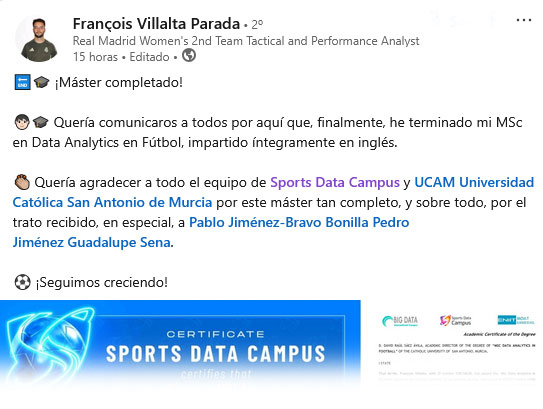
François Villalta Parada
¡Máster completado! Quería comunicaros a todos por aquí que, finalmente, he terminado mi MSc en Data Analytics en Fútbol, impartido íntegramente en inglés.
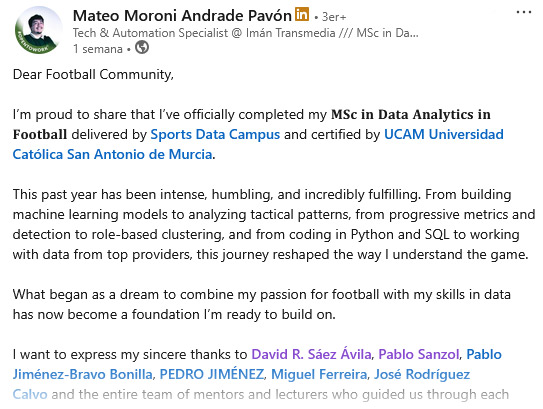
Mateo Moroni Andrade Pavón
I want to express my sincere thanks to David R. Sáez Ávila, Pablo Sanzol, Pablo Jiménez-Bravo Bonilla, PEDRO JIMÉNEZ, Miguel Ferreira, José Rodríguez Calvo and the entire team of mentors. …
FAQ – Frequently Asked Questions
VACIO
El Big Data ha abierto una puerta transversal para su óptima aplicación al deporte, en concreto, al fútbol. Por ello, es una herramienta útil para reforzar la construcción de la dirección deportiva. Es muy difícil entender uno de los estamentos más importantes de un club de fútbol sin la aplicación del dato de forma profesionalizada. En definitiva, el dato es un pilar básico que ayuda a optimizar procesos, así como a detectar talento en cualquier competición y a reducir al mínimo el factor suerte.
- Big Data y fútbol.
- Estructura, organización y planificación de una dirección deportiva de fútbol.
- Los pilares básicos de una dirección deportiva.
- El seguimiento en bruto y en neto.
- Los perfiles.
- La negociación.
- La adaptación.
- El dato y la reducción del factor suerte.
- La cantera..
Is this program for me?
Yes. The Master’s in Artificial Intelligence Applied to Sports is designed for data scientists, data and software engineers, AI professionals, performance analysts and sports professionals who want to apply Artificial Intelligence and data analytics to sports.
It is particularly suited to candidates with a technical or analytical background who want to specialise in AI applications within the sports industry.
Do I need previous experience in Artificial Intelligence or sports?
You do not need to be an Artificial Intelligence expert. The programme develops knowledge progressively from the foundations to more advanced applications of machine learning, deep learning and data analysis in sports.
Previous professional experience in the sports industry is not required, although an interest in applying technology and data to sport is recommended.
Do I need programming, statistics or mathematics knowledge?
A basic foundation in Python, statistics and mathematics is recommended. The Master’s is a technical programme that involves working with data, algorithms and Artificial Intelligence models.
You do not need advanced expertise before starting, but previous analytical or programming knowledge will help you progress through the technical content.
What will I learn during the Master’s?
You will learn to develop predictive models, analyse sports data and apply Artificial Intelligence to real sporting challenges using machine learning, deep learning and data analytics.
The programme covers applications in sports performance, injury prevention, tactical-technical analysis, sports strategy, scouting, event management and fan engagement.
Which AI tools and technologies are covered?
The programme includes Python, machine learning, deep learning and advanced data analytics applied to sports. You will also learn to work with structured and unstructured data, including images, video and social media data.
These technologies are used to develop predictive models, identify patterns and support decision-making across different areas of sport.
VACIO
El Big Data ha abierto una puerta transversal para su óptima aplicación al deporte, en concreto, al fútbol. Por ello, es una herramienta útil para reforzar la construcción de la dirección deportiva. Es muy difícil entender uno de los estamentos más importantes de un club de fútbol sin la aplicación del dato de forma profesionalizada. En definitiva, el dato es un pilar básico que ayuda a optimizar procesos, así como a detectar talento en cualquier competición y a reducir al mínimo el factor suerte.
- Big Data y fútbol.
- Estructura, organización y planificación de una dirección deportiva de fútbol.
- Los pilares básicos de una dirección deportiva.
- El seguimiento en bruto y en neto.
- Los perfiles.
- La negociación.
- La adaptación.
- El dato y la reducción del factor suerte.
- La cantera..
Does the programme include practical AI projects with sports data?
Yes. The Master’s combines technical learning with practical applications of Artificial Intelligence using sports data. Students work on developing models and analytical solutions for challenges related to performance and other areas of the sports industry.
The practical approach connects AI methods, data analysis and sporting problems throughout the programme.
Can I combine the Master’s with my job or family?
Yes. The programme is 100% online and provides 24/7 access to lectures and learning materials through the Virtual Classroom. Live sessions are recorded, allowing you to combine the Master’s with professional and personal responsibilities.
Students also receive the academic calendar in advance and have access to personalised tutoring, academic follow-up and technical support.
Are the live classes recorded?
Yes. Live classes, tutorials and masterclasses are recorded and available through the Virtual Classroom, together with the programme materials.
This allows you to review sessions or continue your studies when you are unable to attend a live class.
Does the Master’s provide professional networking opportunities?
Yes. Students join the Sports Data Campus professional ecosystem and interact with alumni, faculty members and professionals from the sports industry through masterclasses, live sessions, working groups and community channels.
The programme also provides contact with professionals connected to clubs, leagues, federations and sports companies.
Does the programme provide career opportunities in the sports industry?
The Professional Extension Department connects Sports Data Campus students with professional opportunities across clubs, companies and federations, including applied projects and collaborations.
The Master’s also develops skills for roles such as Sports Data Analyst, Sports Data Scientist, Machine Learning Engineer, AI Performance Analyst, Sports Software Developer and AI Consultant in Sports.
Take the Next Step in Your Career
Request information about our programmes and speak with the Sports Data Campus academic team. We will provide personalised guidance and answer your questions about our methodology, entry requirements, career opportunities, available programmes and admissions process.
Request Information