
In professional football, Python is already part of the daily work of analysts, scouts and performance departments. Its value is not just in programming, but in reducing manual tasks, connecting different data sources and turning complex information into useful reports for coaches, sporting directors and technical staf
Is Python used in sports analytics?
Yes, Python is used in sports analytics because it makes it possible to work with large volumes of data, automate processes and turn complex information into useful decisions for coaches, analysts, scouts and directors. Its flexibility makes it a key tool for analysing performance, comparing players, creating visualisations and building predictive models.Python helps analyse match statistics, event data, physical information, positional tracking and advanced metrics. Libraries such as Pandas, NumPy, Matplotlib and Plotly make it easier to clean, explore and present sports data, while tools such as Scikit-learn support models applied to performance, scouting and injury prevention.
Python also connects different sources of information, such as APIs, databases, CSV files, spreadsheets, tracking platforms and GPS sensors. This integration reduces manual work and makes it possible to create updated reports much faster. That’s why mastering Python is no longer just a technical advantage, but an increasingly relevant skill for any professional who wants to grow in sports analytics.
Turn theory into practice with a resource designed for you, created to help you start analysing football with Python from the very first exercise
Advantages of using Python for sports analysis
Python offers a powerful, accessible and adaptable environment, making it the ideal tool for anyone working with data in sport. These are its main advantages:
- Clear and easy-to-learn syntax: Ideal for both technical and non-technical profiles, as it allows analysts to focus on the analysis without needing to be expert programmers.
- Large ecosystem of libraries: Tools such as Pandas, NumPy, Matplotlib and Scikit-learn cover the full analytics cycle, from data collection to prediction.
- Automation of repetitive tasks: Python saves time by creating scripts that clean data, generate reports or collect statistics automatically.
- Powerful and intuitive data visualisation: It makes it easier to create charts, heatmaps and interactive dashboards to communicate results clearly.
- High compatibility and integration: Python connects easily with APIs, databases, spreadsheets and sports platforms.
- Advanced predictive capability: It supports the creation of models to anticipate injuries, performance levels and tactical outcomes.
- Active and growing community: There is a global network of users sharing solutions and useful resources for sports analysts.
- Generative AI tools: They make code writing almost run in the background, so the focus stays on the process and the purpose of each task.
How is Python used in football?
The use of Python for football analysts has become established across performance, scouting and tactical analysis departments. Its value lies in organising data from different sources, automating processes and turning sporting information into faster, more accurate decisions.
Before looking at each specific application, it is worth understanding where it adds the most value inside a club. Python is used in tasks such as performance evaluation, video analysis, positional data work, report automation and talent detection through data.
Player and team performance analysis
One of the main uses of Python for analysts is the analysis of individual and collective performance. Using data from matches, training sessions or tracking systems, the analyst identifies patterns that help explain what happens on the pitch and how decision-making can be improved.
Python makes it possible to organise the analysis across two complementary levels:
- Individual performance: Goals, assists, passing accuracy, duels won, recoveries, shots, defensive actions, xG, xA, progressive passes and involvement in attacking sequences.
- Collective performance: Attacking output, defensive solidity, counter-pressing, control of the game’s tempo, effectiveness across different phases of the match and the team’s tactical behaviour.
With libraries such as Pandas, NumPy and Matplotlib, this data is turned into clear tables, charts and reports for the coaching staff. This means analysis is supported by comparable evidence that helps adjust training, prepare matches and detect areas for improvement.
Predictive modelling in football
Predictive modelling in football is one of the most advanced applications of Python for football analysts. Using historical data, performance metrics and contextual variables, analysts train models that estimate future scenarios and detect patterns that are hard to spot through observation alone.Python makes it possible to work with models applied to different sporting objectives:
- Individual performance: Physical development, competitive consistency, attacking impact, accumulated load and adaptation to different match contexts.
- Injury risk: Accumulated minutes, intensity, physical history, fatigue, load changes and the player’s response to training.
- Predictive scouting: Talent progression, profile similarity, expected performance and fit within a playing model.
- Tactical analysis: Probability of creating chances, risk after losing possession, pressing effectiveness and team behaviour against different opponents.
Libraries such as Scikit-learn, XGBoost and TensorFlow help build models trained with sports data. However, the real value is not just in the algorithm, but in choosing the right variables, interpreting the results and translating them into decisions the coaching staff can understand.
This is how Python turns predictive modelling into a practical tool for anticipating trends, reducing uncertainty and improving sports planning.
What does a data analyst do with Python?
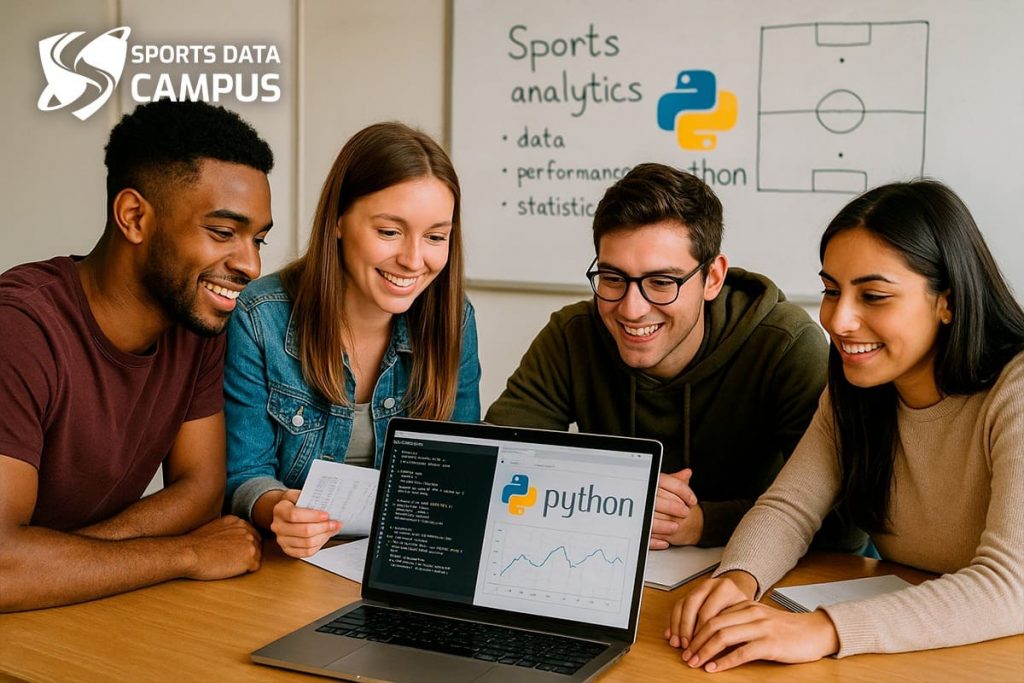
A football data analyst uses Python to turn scattered information into useful answers for coaching staff, the scouting department and sporting directors. Their work combines football judgement, data processing and the ability to communicate findings clearly.
Their usual workflow follows a specific sequence:
- They collect data from statistical platforms, APIs, CSV files, spreadsheets, tracking systems, GPS sensors and video sources.
- They clean the information to correct errors, remove duplicates, standardise player names, normalise competitions and prepare comparable datasets.
- They explore patterns to detect performance trends, tactical behaviours, similar profiles and physical changes throughout the season.
- They build indicators that summarise key information for coaches, scouts, fitness coaches and sporting directors.
- They automate reports to reduce manual tasks and keep reports updated after matches, training sessions or full matchdays.
- They visualise results through charts, dashboards, maps and comparisons that make technical interpretation easier.
- They translate data into decisions to support match preparation, player monitoring, risk prevention and sports planning.
This profile is gaining importance because it connects technology, data and football judgement. An analyst who masters Python works faster, reduces errors and provides actionable information across performance, scouting, injury prevention and match preparation processes.
The profile that knows how to analyse football with Python is becoming increasingly valuable across clubs, academies and sports projects. Start building that skill today with practical exercises from day one.
Python tools and libraries for football analysts
One of the reasons Python is so useful for analysts is its ecosystem of libraries. Every stage of sports analysis has specific tools for collecting data, cleaning it, analysing it, visualising it and turning it into useful reports for the coaching staff.
The most relevant libraries can be grouped according to the type of work carried out by the analyst:
- Data cleaning and analysis: Pandas and NumPy make it possible to work with match statistics, player metrics, physical data, training records and structured databases. They form the foundation for organising information and preparing any subsequent analysis.
- Sports visualisation: Matplotlib, Seaborn and Plotly help create charts, comparisons, heatmaps, performance curves and interactive dashboards. These tools make it easier for coaches, scouts and fitness staff to understand the data without having to work directly with code.
- Predictive modelling: Scikit-learn and XGBoost allow analysts to train models to estimate performance, compare profiles, identify trends and work with scouting scenarios. In more advanced projects, TensorFlow and Keras provide resources for deep learning.
- Video and image analysis: OpenCV makes it possible to work with video sequences, object detection, movement tracking and tactical analysis based on match footage.
- Data extraction and integration: BeautifulSoup, Scrapy, SQL connectors, sports APIs, Google Sheets and CSV files help bring together information from different sources into a single workflow.
It is also advisable to work in environments such as Jupyter Notebook or Google Colab, as they allow code, charts, explanations and results to be combined in the same workspace. This way of working makes experimentation, analysis review and communication with other club departments much easier.
Thus, Python functions as a complete environment for building faster, more reproducible football analysis processes that are closely connected to decision-making.
The future of Python in football analysis
The future of Python for football analysts is closely linked to automation, machine learning, video analysis, tracking data and the integration of increasingly complex data sources. Clubs need professionals who can turn raw data into clear, fast and actionable football insights.
However, mastering Python does not begin with advanced models. It starts with practical tasks: loading a dataset, filtering players, creating rankings, comparing profiles, visualising trends and exporting charts ready for reports. That first step makes the difference between understanding the theory and beginning to work as an analyst.
That is why we have created a practical resource featuring 5 Python scripts for football analysis. It includes notebooks, practice datasets and examples designed for Google Colab and Jupyter, with exercises to explore data, create rankings, compare players, analyse performance over time and generate report-ready visualisations.