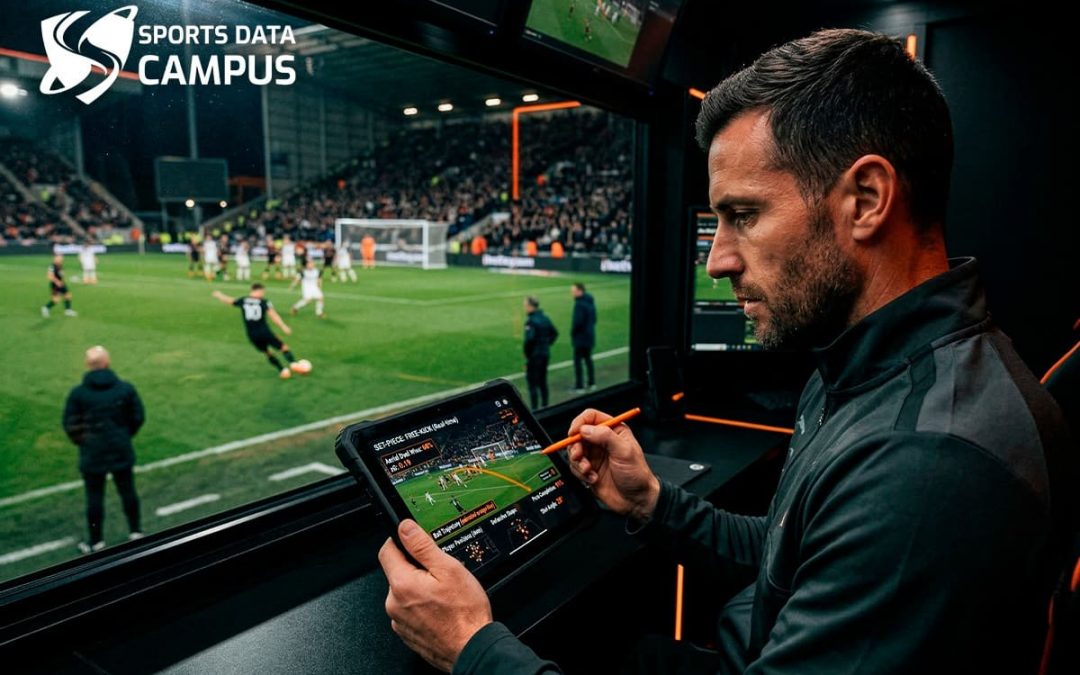
Becoming a football coach now requires far more than knowledge of the game. The process combines structured training, on-pitch experience and a growing understanding of data analysis applied to performance.
This article sets out the steps to follow to build a solid career, from defining your professional profile to developing technical and technological skills. It also explores how the use of analysis tools and evidence-based methodologies is transforming the role of the football coach in increasingly demanding competitive environments.
How to Become a Football Coach from Scratch
Starting a career as a football coach means understanding how the environment you want to work in actually operates and what today’s market demands. Getting started no longer depends only on basic knowledge or previous experience as a player, but on your ability to structure training processes, make well-informed decisions and adapt to very different competitive contexts. Each stage of the journey follows a clear logic, from building your role to developing the tools needed to influence team performance with precision.
Becoming a football coach takes more than knowing the game, as it combines training, on-pitch experience and data analysis applied to performance
The following sections set out this journey step by step, covering both the evolution of the coach’s profile and the elements that make a real difference to their professional development.
What it means to be a football coach in the data era
The role of the football coach has evolved into a far more complex profile, where intuition alone is no longer enough to support decisions in demanding competitive environments. Team management remains central, but it is now backed by objective information that helps coaches understand the game more clearly and anticipate different scenarios. This transformation does not replace traditional tactical knowledge, but strengthens it through the use of data and analysis tools.
In practice, a coach is no longer limited to designing drills or preparing matches. They also interpret performance metrics, analyse collective patterns and assess individual behaviours with greater precision. This approach makes it possible to adjust training based on evidence, identify trends that are not visible at first glance and optimise decision-making at every stage of the competitive process. The key lies in connecting what happens on the pitch with information that provides context and clarity.
The working environment has also changed. Technical teams now include specialists in analysis, physical preparation and technology, which means the coach must communicate with different professionals and integrate their input into a coherent model. In this context, the ability to interpret data and turn it into concrete actions is a real competitive advantage.
Being a coach in the data era therefore means combining experience, methodology and analytical thinking. Those who master this balance not only improve team performance, but also adapt better to a game that is increasingly structured, measurable and focused on continuous optimisation.
How a football coach works with data day to day
The daily work of a football coach increasingly involves quantifiable information that supports more precise decision-making. Training planning is no longer based only on the coach’s perception of the team’s condition, but also on indicators that reflect load, performance and competitive behaviour. This approach makes it easier to adjust the microcycle according to what the group actually needs, avoiding both overload and a lack of stimulus.
During the week, the analysis starts with a review of the previous match. Using video and data, the coach identifies playing patterns, recurring situations and critical moments that affected performance. This reading does not stop at diagnosis, but turns into specific objectives for the following sessions. Each task is designed with a clear purpose, aligned with what the team needs to improve or reinforce.
During training sessions, data also plays a control role. Monitoring load, whether through perceived exertion or more advanced tools, makes it possible to adjust the intensity and volume of work. Video also helps correct behaviours in real time or in later reviews, speeding up the players’ learning process.
When preparing for the next match, opposition analysis provides additional context. The coach studies trends, structures and weaknesses to design a plan that maximises the chances of success. This whole process turns information into practical decisions, connecting analysis with direct intervention on the pitch.
Working with data day to day does not mean depending on it, but using it as support to make better decisions. A football coach who integrates this logic builds a more controlled environment, reduces uncertainty and improves the consistency between what the team trains and how it competes.
Key skills of a modern football coach
The performance of a football coach does not depend only on their knowledge of the game, but on their ability to bring together different skills in changing contexts. Today’s football demands well-rounded profiles, capable of leading, analysing and adapting their intervention according to what is happening in the competitive environment. These are the skills that make the difference in professional development:
- Reading the game in a real context: Interprets tactical situations during the match and makes quick decisions based on what is actually happening, not only on what was planned.
- Structured planning ability: Designs microcycles and sessions with clear objectives, aligning each task with the game model and the team’s needs.
- Effective communication with the group: Communicates ideas clearly, corrects without creating resistance and adapts the message according to the player’s age, level and context.
- Group management and leadership: Organises roles, resolves conflicts and maintains a stable competitive environment where each player understands their function.
- Analytical thinking applied to performance: Interprets data, identifies patterns and uses information to adjust training and make more precise decisions.
- Adaptability and decision-making: Adjusts the initial plan according to how the match develops, the team’s condition or external factors.
- Integration of technology into the training process: Uses video, tracking and analysis tools as support to improve both collective and individual performance.
Mastering these skills allows the football coach to have a greater impact on team performance and adapt to an increasingly demanding and professionalised environment.
Technological tools used by a football coach
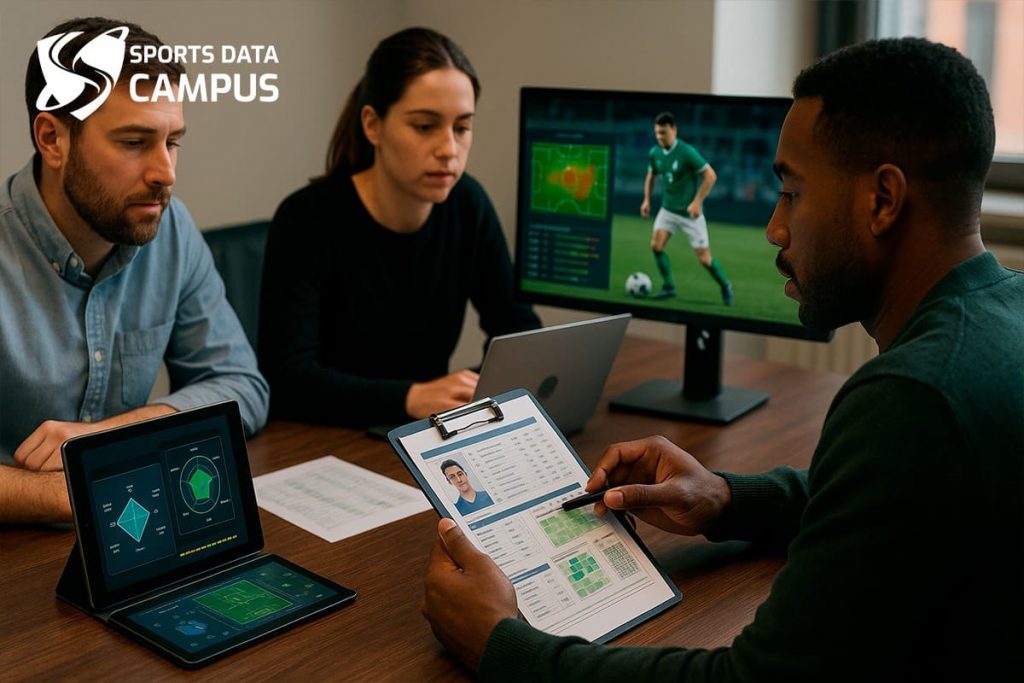
Today’s environment requires the football coach to rely on technology that helps analyse, plan and optimise performance with greater precision. These tools do not replace judgement, but they do expand the coach’s ability to observe and improve the quality of day-to-day decisions.
To understand how this technology is applied in practice, it is important to identify the tools that form part of the coach’s daily work:
- Video analysis software: Breaks down matches and training sessions, tags actions and detects patterns of play. Tools such as Hudl Sportscode, Nacsport and Wyscout support this process for both in-house analysis and opposition analysis.
- Tracking and GPS systems: Record movements, speeds, accelerations and workloads. Solutions such as Catapult Sports make it possible to monitor physical performance using objective data.
- Data analysis platforms: Bring together individual and collective metrics to assess performance and detect trends. Examples such as StatsBomb and Opta Sports provide advanced data for decision-making.
- Digital scouting tools: Support the study of players and opponents through databases and video. Platforms such as Wyscout and InStat make it possible to analyse performance across different competitive contexts.
- Dashboards and data visualisation: Turn information into clear charts to interpret patterns and communicate conclusions. Tools such as Tableau and Power BI help structure this type of analysis.
- Training planning applications: Organise sessions and microcycles in a structured way. Solutions such as SoccerLAB help design and manage day-to-day work.
- Artificial Intelligence-based solutions: Automate processes such as video tagging or pattern detection. Tools such as SkillCorner and Second Spectrum add an advanced layer of analysis.
The strategic use of these tools makes the football coach a more precise profile, better prepared to compete in a context where information makes the difference.
Career opportunities for a football coach with an analytical profile
The job market is expanding opportunities for the football coach who integrates analysis and technology into their methodology. This profile does not only lead to the traditional dugout role, but also fits into increasingly specialised structures within clubs and sports organisations. The ability to interpret data and turn it into practical decisions opens up new professional pathways with greater projection. In practice, this creates a wide range of opportunities within the football ecosystem:
- Head coach in youth or amateur football: Leads teams by applying a structured methodology and using data to improve player development and collective performance.
- Assistant coach or technical assistant: Supports planning, opposition analysis and decision-making, adding a more objective perspective based on information.
- Performance analyst: Processes match and training data, producing reports that help the coaching staff optimise the team’s play.
- Scouting and recruitment specialist: Assesses players through data and video, identifying talent and matching profiles to the team’s needs.
- Academy methodology lead: Designs training models, structures content by development stage and ensures consistency in player development.
- Consultant in data analysis applied to football: Works with clubs or academies to implement analysis systems, dashboards and evidence-based decision-making processes.
- Coach with a hybrid pitch and data profile: Combines team management with analysis, providing a competitive advantage in environments looking for well-rounded profiles.
This range of career opportunities shows how the football coach is no longer a profile limited to the dugout. Those who master analysis and technology gain access to more opportunities, adapt better to the market and build a career with greater stability and growth within professional football.
Training needed to become a football coach today
Training as a football coach is no longer just about getting licences or completing basic courses. Today’s context demands a profile that combines technical knowledge, teaching ability and an understanding of analysis applied to performance. Formal training remains the foundation, as it is essential for accessing official competitions and validating the role within a club. However, this first level is only the starting point.
From there, real development begins when the coach expands their training into areas that directly affect decision-making. Training planning, load control, game analysis and data interpretation have become key skills. This approach allows coaches to influence team performance with greater precision and justify every adjustment with clear reasoning.
In this context, specialising in data analysis applied to football makes a clear difference. The MSC Data Analytics in Football responds to this need by training profiles capable of integrating technology, metrics and methodology into daily work. It is not just about understanding data, but about using it to improve the game, optimise processes and raise performance in real contexts.
Want to be one of them? Fill in the form below to receive more information about the MSC Data Analytics in Football