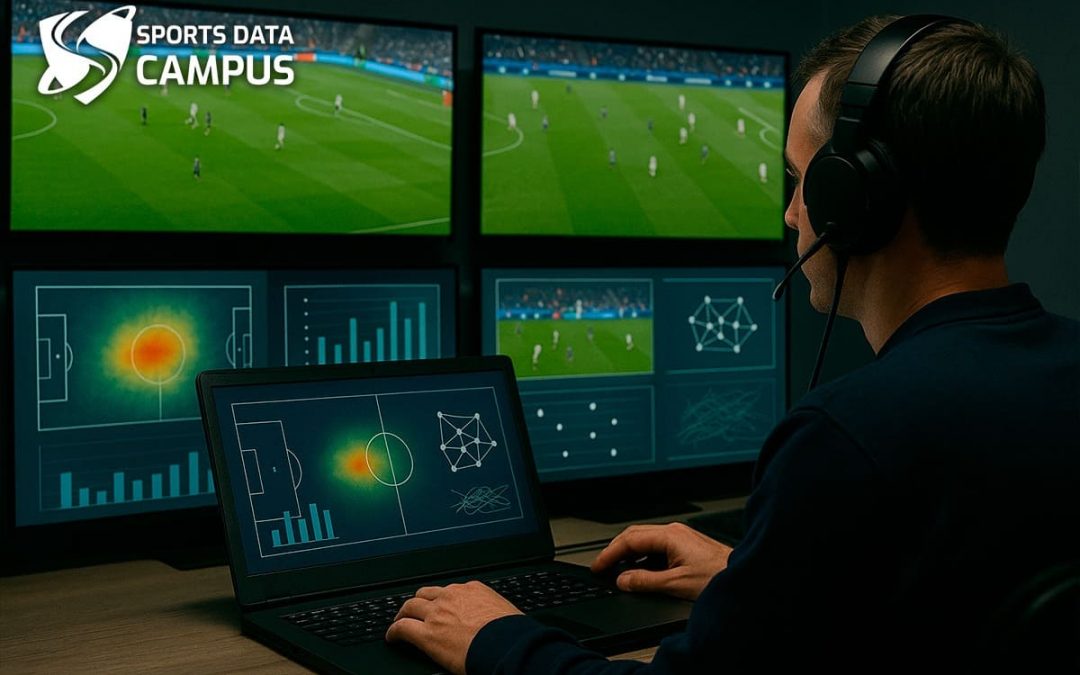
Big Data tools for football play a key role in football data analysis, helping clubs, analysts and coaching staff turn tactical, physical and technical data into actionable insights. From football data analysis tools and analytics platforms to GPS systems and analysis software, these technologies support performance analysis, scouting, injury prevention and data-driven decision-making.
The key is not collecting more data, but interpreting it correctly. Modern football analytics helps identify patterns, evaluate player and team performance, and turn complex information into practical insights for professional football.
Big Data tools for football
The football data analysis market includes a wide range of specialised tools designed for different areas of professional football. Some football data analysis tools focus on event data and tracking, while others are built around video, physical monitoring, scouting, artificial intelligence or integrated performance management.
This variety allows clubs to choose the right football analytics platform or analysis software depending on the type of insight they need. Below, we review eight Big Data tools used across football performance analysis, scouting and tactical analysis, highlighting their main applications in professional environments.
Hudl StatsBomb
Hudl StatsBomb is a football analysis platform that combines advanced data with video in a unified technical environment. Integrated into the Hudl ecosystem since 2024, it enables clubs, academies, and national teams to work with over 3,400 events per match, including exclusive metrics such as contextualised pressure, body coordinates, dribbling directions, and 360-degree positional data.
This analytical depth connects seamlessly with tools like Hudl Sportscode and Studio, allowing coaches to tag plays, create tactical playlists, cross-reference physical data with technical decisions, and share customised clips with staff or players in seconds. The entire workflow, from pre-match to post-match, can be managed on a single platform.
Hudl StatsBomb also supports predictive analysis, player comparison across different contexts, and advanced scouting, with direct integration into programming languages such as Python and R. It further provides tools for opponent research and the design of evidence-based strategies.
Its use has become widespread among elite clubs and development structures aiming for tactical precision, operational efficiency, and a deeper reading of the game backed by objective data.
Big Data tools for football have driven a cross-cutting transformation across the whole of professional sport, paving the way towards a smarter, more precise, and more sustainable model
SkillCorner
Hudl StatsBomb is a football data analysis platform that combines advanced event data and video analysis within the Hudl ecosystem. It captures more than 3,400 events per match, including contextual pressure, body orientation, dribble direction and 360-degree positional data, providing analysts with a more complete understanding of player and team performance.
Widely used for football performance analysis, tactical evaluation and scouting, the platform integrates seamlessly with Hudl Sportscode and Hudl Studio, allowing analysts to tag actions, create playlists, review game sequences and link video with advanced metrics. It also supports workflows using Python and R for customised football analytics and data modelling.
Professional clubs, national teams, academies and performance departments use Hudl StatsBomb to analyse players, opponents and tactical behaviours across different competitive contexts.
Its main strength lies in combining advanced football data analysis with video, enabling analysts to understand not only what happened during a match, but also how, where and why it happened.
Catapult
Catapult is a football performance analysis and athlete monitoring platform used to track physical output during training and matches. Its wearable technology combines GPS with accelerometers, gyroscopes and magnetometers to measure variables such as distance covered, maximum speed, sprint efforts, external load and impacts.
The platform turns physical performance data into actionable information for workload management, recovery and injury prevention. Fitness coaches, performance analysts and medical staff can use these metrics to individualise training loads, monitor accumulated fatigue and assess how players respond throughout the competitive cycle.
Catapult also includes OpenField, its performance analysis software for visualising live data, automating reports and comparing players or training sessions. This allows physical data to become part of a broader football analytics workflow rather than remaining as isolated GPS metrics.
Its main value lies in connecting athlete tracking with football performance analysis, helping clubs integrate physical monitoring, workload management and technical decision-making within the same performance environment.
GPSports (Stats Perform)
GPSports, now part of the Stats Perform ecosystem, is a player monitoring and football performance analysis solution built around advanced GPS technology. It captures key physical metrics, including total distance, speed zones, accelerations, decelerations, impacts and neuromuscular load, helping coaching and medical staff make informed decisions about training intensity, fatigue management and injury prevention.
By integrating athlete tracking with the Stats Perform football analytics platform, GPSports combines physical performance data with technical and tactical events to provide a more complete view of player performance. For example, a high-intensity defensive sprint can be linked to a previous loss of possession or a tactical recovery, giving greater context to the data collected.
The platform also enables analysts to monitor long-term performance trends, create customised workload alerts and compare players across training sessions and competitive periods. These capabilities support evidence-based planning and help performance departments adapt training loads to each player’s position, physical profile and competitive demands.
Its main strength lies in connecting athlete tracking, football performance analysis and football analytics within a single workflow, allowing coaches, analysts and sports scientists to make more accurate decisions based on objective performance data.
Iterpro Sports Intelligence
Iterpro Sports Intelligence is a football intelligence platform designed to centralise performance, medical, scouting and operational data within a single environment. By bringing together information from multiple departments, it helps clubs streamline workflows and make more consistent data-driven decisions across the organisation.
The platform combines football analytics with player monitoring, medical records and training data to build a complete performance profile for each player. One of its key features is injury risk assessment, which integrates workload, medical history and performance metrics to support training planning and reduce the likelihood of physical issues.
iterpro also offers interactive dashboards and reporting tools that improve communication between coaches, performance analysts, sports scientists and medical staff. The platform can integrate data from GPS systems, video analysis software, scouting databases and other football data analysis tools, creating a unified view of player and team performance.
Its main strength lies in connecting football intelligence, performance analysis and operational management within a single platform, enabling clubs to transform fragmented information into actionable insights that support both sporting and strategic decision-making.
Sics
Sics is football analysis software designed for tactical and technical match analysis through synchronised video and structured performance data. It allows analysts and coaching staff to tag events, break matches down by phases of play and create customised reports aligned with the team’s tactical model.
One of its main strengths is the flexibility of its tactical analysis workflow. Coaching staff can define their own analytical categories for pressing, build-up play, duels, defensive cover, recoveries or goal situations, allowing the analysis to reflect the team’s playing principles rather than relying only on predefined event classifications.
Sics also supports video-based football performance analysis, making it easier to create clips, multimedia presentations and reports that can be shared directly with players. By integrating video with GPS data and other performance metrics, the platform adds physical and contextual information to tactical analysis.
Its main value lies in connecting football analysis software, video analysis and tactical interpretation within the same workflow, helping analysts turn match footage and performance data into clear information for coaching, player development and match preparation.
Metrica Sports Play
Metrica Sports Play is football analysis software focused on tactical and positional analysis through video and tracking data. Its main advantage is the ability to generate tracking information from standard match footage, allowing analysts to study spatial behaviour without relying exclusively on dedicated tracking systems or specialised sensors.
The platform supports football data analysis by extracting player and ball coordinates, measuring distances between lines and zones, and identifying positional patterns across different phases of play. Analysts can also use drawing and visualisation tools to explain tactical concepts and communicate findings more clearly to coaches and players.
Metrica Sports Play also allows data to be exported for use in statistical environments and programming languages such as Python, making it possible to build bespoke models from positional and tracking data. This makes the platform particularly useful for analysts who want to combine video analysis with more advanced football analytics workflows.
Its main strength lies in connecting video, tracking data and tactical analysis within the same environment, helping clubs, analysts and coaching staff move from visual observation to structured football data analysis without requiring a highly complex technological setup.
Olocip (Plexus Sport)
Olocip, founded by former professional footballer Esteban Granero and acquired by Plexus Tech in April 2026, is now part of Plexus Sport, the group’s division specialising in sports technology. It is an AI-powered football analytics platform that uses predictive models for scouting, performance analysis and sporting decision-making. Its technology goes beyond historical statistics to estimate how players could perform in different competitive environments.
One of its main strengths is contextualised predictive scouting. The platform uses football data analysis and machine learning models to estimate how players could perform in a different club, competition or playing system. It also evaluates individual actions according to their impact on a team’s chances of scoring or conceding and provides predictions of future player market values.
Olocip also offers AI-powered solutions for physical performance monitoring and injury risk prediction. These integrate information from GPS systems, training loads and medical records to identify performance trends, detect anomalies and support more personalised workload management.
Its main advantage lies in combining predictive football analytics with contextual performance evaluation, helping clubs identify talent, assess transfer options and plan future sporting decisions. By integrating advanced football data analysis with Artificial Intelligence, Olocip enables analysts to move beyond descriptive statistics and evaluate potential outcomes before making decisions.
Other software used in Big Data for football
In addition to specialised Big Data tools for football, many other solutions support football data analysis across different areas of the game. Each platform addresses a specific need within the analytical workflow, from visualising performance data to scouting, team management and predictive modelling.
- Data visualisation: Power BI and Tableau help analysts create interactive dashboards, compare player and team metrics, and transform large datasets into clear visual insights that support football analytics and decision-making.
- Scouting and football data analysis: Wyscout, Opta and StatsBomb provide access to thousands of matches, advanced statistics, video and performance data, enabling clubs to analyse players, evaluate opponents and support recruitment decisions.
- Team and performance management: Platforms such as Nacsport, Teamworks and Trello help coaching staff coordinate training, centralise communication and organise daily workflows across different departments.
- Programming and advanced football analytics: Python and R allow analysts to build bespoke models, automate football data analysis and create advanced visualisations. Combined with libraries such as TensorFlow or Keras, they support machine learning applications for injury prediction, performance modelling and tactical simulations.
Together, these tools create an integrated football analytics ecosystem, allowing clubs to combine data collection, performance analysis and operational management within a single workflow.
Professional football clubs rarely rely on a single platform. Instead, they combine football data analysis tools, tactical analysis software, GPS tracking systems, scouting platforms, performance management solutions and Artificial Intelligence to build a complete view of player and team performance.
How to choose a Big Data tool for football
Choosing the right Big Data tool for football depends on the type of analysis a club or department needs to carry out. Some platforms focus on tactical analysis and scouting, while others specialise in physical monitoring, Artificial Intelligence, tracking or integrated performance management. Professional clubs therefore tend to combine several football data analysis tools to meet the needs of different departments and build a connected analytics workflow.
| Objective | Recommended tool | Main use |
|---|---|---|
| Tactical and video analysis | Hudl StatsBomb | Video, advanced event data and scouting |
| Tracking and spatial analysis | SkillCorner | Computer vision-based tracking |
| Physical performance | Catapult | GPS, workload monitoring and injury prevention |
| GPS monitoring | GPSports (Stats Perform) | Physical tracking and workload analysis |
| Integrated performance management | Iterpro Sports Intelligence | Performance, medical data and planning |
| Custom tactical analysis | Sics | Video and reports adapted to the playing model |
| Video-based tracking | Metrica Sports Play | Positional analysis without dedicated sensors |
| Predictive Artificial Intelligence | Olocip | Scouting, prediction and causal modelling |
No single football analytics platform covers every area of performance analysis. The right choice depends on the club’s structure, available resources and the objectives of its analysis department. In practice, professional organisations combine several platforms to integrate tactical, physical and predictive data within the same football analytics ecosystem.
In disciplines as diverse as tennis, cycling, basketball, and athletics, data analysis has become the cornerstone that translates vast information into more precise, efficient, and strategically sound decisions
How is Big Data used in sport?
Big Data tools for football are part of a wider shift towards sports data analysis across professional sport. The same analytical methods are now used in basketball, athletics, tennis and cycling, where data supports training, competition planning and evidence-based decision-making.
The main applications of Big Data in sport can be grouped into three areas:
- Training and physical performance: Wearable devices and biometric sensors capture variables such as heart rate, acceleration, fatigue and recovery. Specialist software then processes this information to adjust workloads, optimise performance and reduce injury risk.
- Tactical and performance analysis: Video analysis combined with tracking data helps identify collective behaviours, detect patterns of play and develop predictive models that support match preparation and player evaluation.
- Sports management: Big Data also supports competition planning, resource management, marketing strategies and fan engagement by analysing behavioural and consumption data.
The development of football data analysis reflects a broader transformation across professional sport. The integration of data, Artificial Intelligence and predictive modelling has changed how organisations train athletes, evaluate performance and make strategic decisions. Understanding how to collect, analyse and interpret sports data is therefore becoming an increasingly valuable skill across clubs, federations and sports organisations.
Take your skills further with the MSc in Data Analytics in Football. Learn how to work with football data analysis tools, develop projects using real performance data and build the analytical skills required in professional football environments.
Want to be one of them? Fill in the form below to receive more information about the MSC Data Analytics in Football
What Big Data tools do professional football clubs use?
Professional football clubs use tools such as Hudl StatsBomb, Catapult, SkillCorner, Wyscout, Olocip and Metrica Sports for football data analysis, scouting, tactical analysis and physical performance monitoring. Each platform serves a different purpose within a broader football analytics workflow.
What is the best football data analysis tool?
There is no single best football data analysis tool for every situation. Hudl StatsBomb stands out for tactical analysis and advanced event data, Catapult for physical performance monitoring, SkillCorner for tracking data and Olocip for Artificial Intelligence and predictive football analytics.
What software do football analysts use?
Football analysts combine data platforms, tracking systems, video analysis software, visualisation tools and programming environments depending on the type of analysis required. Platforms such as Hudl StatsBomb and SkillCorner provide match and tracking data, while Power BI and Python help analysts process, visualise and customise the information.
Can you learn Big Data for football without programming skills?
Yes. Many football data analysis tools provide visual and user-friendly environments that do not require advanced programming skills. However, learning Python or statistical analysis gives analysts greater flexibility and access to more technical football analytics roles.
What is the difference between football analysis software and a Big Data tool?
Football analysis software usually focuses on reviewing, tagging and interpreting match footage, while Big Data tools for football work with larger volumes of technical, physical, event or positional data. These platforms help analysts identify patterns, compare performance and build more advanced models for football data analysis.