
Big Data in sport involves collecting, processing and analysing large volumes of data to improve performance, optimise tactical decisions and anticipate game scenarios. This approach combines event data, tracking and Artificial Intelligence to turn information into concrete actions within the sporting context.
From this base, Big Data in Sport is changing the way teams train, compete and understand the game. Clubs no longer rely on intuition alone. Sports data analysis makes it possible to interpret every action with precision, detect patterns and make informed decisions in highly demanding environments.
This way of working also has a direct impact on key areas such as physical preparation, tactical planning and injury prevention. Data is no longer just descriptive. It has become an operational element within sports performance.
How Big Data in Sport Impacts Performance and Decision-Making
Big Data in Sport transforms decision-making within clubs and sporting organisations. Data becomes an operational asset that directly influences performance and strategy.
In the game itself, data analysis helps teams understand what is really happening on the pitch. Using event and tracking data, teams can interpret behavioural patterns, adjust positioning and optimise collective dynamics according to the match context. This level of precision reduces reliance on intuition and improves tactical coherence.
The impact of Big Data in Sport also extends to physical preparation and player management. Load control and continuous monitoring make it possible to anticipate risks, adjust training and sustain performance more consistently throughout the season.
Data also redefines processes such as scouting and sporting planning. Clubs analyse player profiles using objective criteria, compare performance across different contexts and make decisions that are more closely aligned with their playing model.
This shift does not only affect immediate performance. It also changes the internal structure of clubs, which are moving towards more analytical models where every decision is supported by specific information rather than isolated perceptions.
The impact of Big Data in Sport goes beyond improving performance on the pitch. It also changes the way the game is analysed and understood
How Big Data in Sport Is Used in the Day-to-Day Work of a Club
Big Data in Sport is integrated into the daily work of clubs and coaching staff to turn data into operational decisions. Its use directly shapes how teams train, compete and plan each match in high-performance environments.
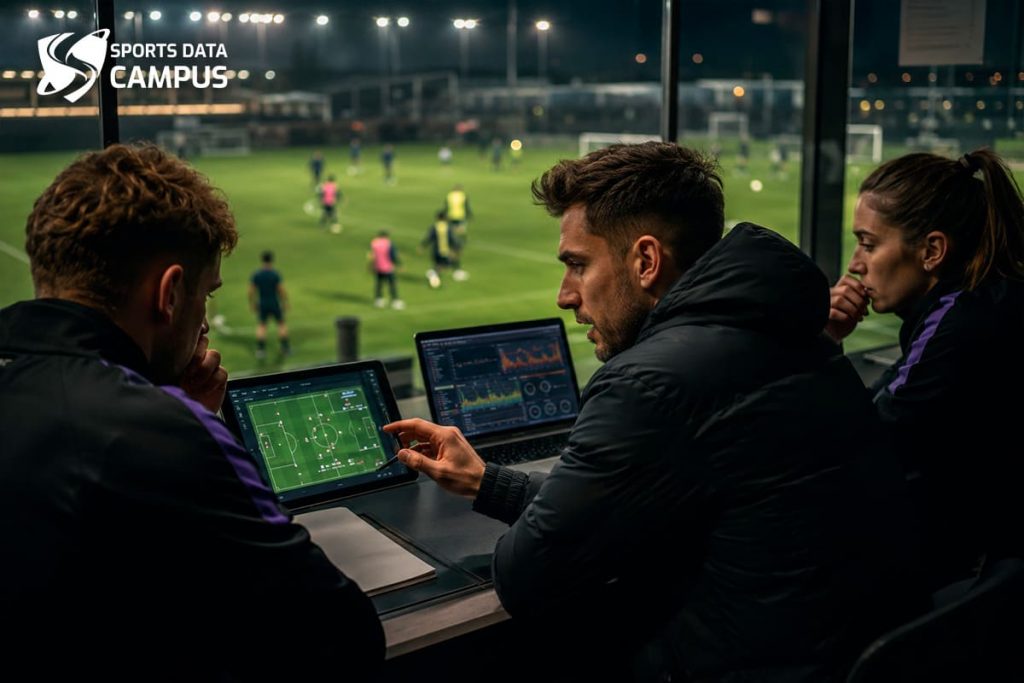
During training sessions and competitions, data collection systems capture information in real time. Using tracking, event and physical load data, teams can interpret player behaviour and adjust both individual performance and collective dynamics with greater precision.
This use of data translates into specific applications within the club:
- Real-time data collection through wearables and tracking systems that record position, speed and physical load.
- Advanced tactical analysis to identify the team’s own playing patterns, as well as those of the opposition, and adjust the competitive model.
- Injury prevention based on load control and models that detect signs of fatigue or physical risk.
- Talent identification by comparing performance across different contexts and competitions.
Based on these applications, Big Data in Sport becomes a decision-making tool. Its value does not lie in the data itself, but in the ability to interpret it and apply it within the competitive context.
Applications of Big Data in Sport for Performance, Tactics and Scouting
The value of Big Data in Sport emerges when it is applied to specific areas that directly affect competitive performance. From player preparation to tactical decision-making, data allows clubs to intervene with precision at different levels of the game.
From this approach, the main applications of Big Data in Sport are concentrated in three key areas within professional clubs.
Performance Improvement
Big Data in Sport makes it possible to optimise performance through the objective measurement of a player’s physical and competitive behaviour. Data is used to adjust loads, improve movement efficiency and sustain competitive levels throughout the season.
Through wearable devices and tracking systems, teams record variables such as distance covered, accelerations, effort intensity and time spent in high-demand zones. This information is integrated into models that help interpret how each player responds in different match and training contexts.
Based on this analysis, coaching staff adjust planning on an individual basis. Training is adapted to the player’s profile, load peaks are controlled and the risk of physical overexposure is reduced. This approach improves performance consistency and helps players reach competition in better condition.
A clear example can be seen in the use of GPS systems in professional football, as these devices monitor performance in real time and allow immediate decisions on substitutions, rotations or adjustments to game intensity.
Tactical Strategies
Big Data in Sport makes it possible to build tactical strategies based on objective game analysis. Teams no longer prepare matches through video alone. They integrate event and tracking data to understand how the opposition behaves in different competitive scenarios.
Through this analysis, coaching staff identify patterns such as progression zones, passing relationships and behaviours in defensive and attacking phases. This information helps them design more precise match plans and adjust the playing model according to the context.
Teams such as Manchester City integrate this type of analysis into their weekly preparation. Studying previous matches makes it possible to detect trends in the opposition and build specific responses to neutralise their strengths and exploit their weaknesses.
Data also makes it possible to assess the real impact of tactical decisions. Teams compare behaviours before and after adjustments, which helps them iterate their playing model with greater speed and coherence.
Talent Detection
Big Data in Sport transforms scouting processes by introducing objective criteria into talent identification. Player evaluation is now supported by data that makes it possible to compare performance across different competitive contexts, rather than relying solely on direct observation.
Using event and tracking data, clubs analyse variables such as involvement in the game, impact in attacking and defensive phases, and the ability to adapt to different tactical models. This approach helps identify profiles that fit the team’s playing idea, not just players who stand out in isolation.
Data analysis also expands the reach of scouting. Clubs can assess players in less high-profile leagues with the same level of detail as in elite competitions, reducing dependence on traditional markets and opening up new recruitment opportunities.
This use of Big Data in Sport improves decision-making in transfers by reducing uncertainty. Data does not replace observation, but it provides an objective basis for validating talent and projecting performance in future scenarios.
The integration of Big Data drives innovation in the sports industry, opening up new possibilities in areas such as scouting, tactical planning and player development
Training in Big Data in Sport to Work in the Industry
The growth of Big Data in Sport has transformed the professional profile clubs are looking for. Understanding the game through experience alone is no longer enough. The industry needs professionals who can analyse data, interpret performance and make evidence-based decisions in competitive contexts.
In this scenario, Sports Data Campus offers the MSC Data Analytics in Football, a programme designed to train professionals capable of working with real football data. The training combines analysis, technological tools and practical application to understand the game from a complete perspective, where data makes it possible to interpret the whole match, not just isolated actions.
This type of specialisation makes a difference in an environment where analysis is now part of clubs’ daily work. Training in Big Data in Sport opens up new career opportunities and helps professionals develop a competitive edge in an increasingly demanding, data-driven industry.
Want to be one of them? Fill in the form below to receive more information about the MSC Data Analytics in Football
/div>